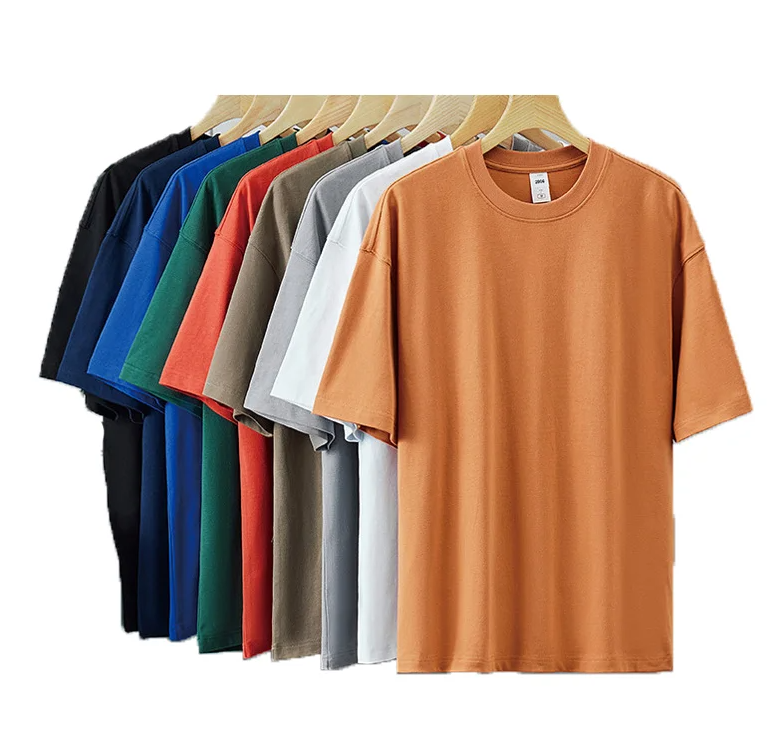
Description
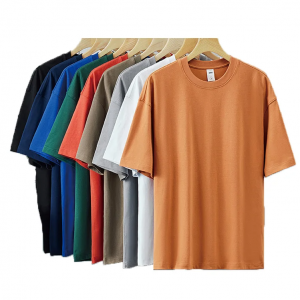
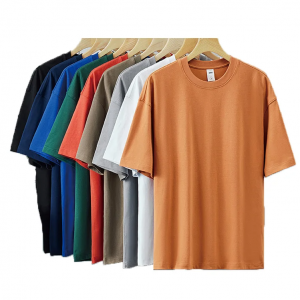
Cotton T-shirts remain a practical choice for fashion brands, retailers, promotional companies, and private label businesses. Their flexibility allows the same basic product to be developed into lightweight summer tees, premium basics, oversized streetwear, or customized promotional apparel.
For buyers, the main challenge is choosing the right combination of cotton fabric, weight, fit, construction, and finishing. A well-planned cotton t shirt is not simply defined by being 100% cotton. The yarn, knitting structure, GSM, pattern, sewing quality, and finishing all affect the final product.
Cotton Fabric Selection Comes First
Fabric selection has a direct effect on how a T-shirt feels and performs. Lightweight cotton jersey can work well for warm-weather collections, while heavier jersey provides more structure for oversized or streetwear styles.
GSM is one useful reference when comparing fabrics, but it should not be considered a standalone quality indicator.
| Fabric Weight | Common Application | Main Feature |
|---|---|---|
| 140–170 GSM | Summer T-shirts | Lightweight and breathable |
| 170–220 GSM | Everyday basics | Balanced comfort and durability |
| 220–280 GSM | Premium tees | More body and structure |
| 280 GSM+ | Heavyweight streetwear | Thick and substantial feel |
Yarn quality also matters. Combed cotton and ring-spun cotton can provide a smoother surface, while different yarn constructions may create different hand feels.
A reliable cotton t shirt manufacturer should be able to provide detailed fabric specifications instead of describing the material only as “premium cotton.”
Fit and Pattern Development Shape the Finished Product
Two T-shirts can use the same cotton fabric but look completely different because of their patterns.
Traditional T-shirts usually have a relatively standard shoulder position and body width. Oversized styles require more attention to shoulder width, sleeve proportions, body length, and hem width.
For custom production, buyers should provide clear measurements such as:
-
Chest width
-
Shoulder width
-
Body length
-
Sleeve length
-
Sleeve opening
-
Neck width
-
Neck drop
This information gives the factory measurable targets during sampling.
For brands developing custom oversized tees, pattern grading also needs attention. Simply increasing every measurement equally can create an unbalanced silhouette between sizes.
Neckline and Sewing Details Affect Product Quality
The collar is one of the first areas customers notice.
A good cotton T-shirt normally requires stable rib construction, consistent stitching, and suitable neckline recovery. Poor tension can cause the collar to become wavy or lose its shape after washing.
Shoulder seams are also important, particularly for heavier garments. Shoulder tape can help improve stability and reduce stretching during repeated wear.
A professional durable cotton t shirt manufacturer should inspect these areas during sewing rather than relying entirely on final inspection.
For bulk production, basic sewing checks should cover:
-
Stitch consistency
-
Seam strength
-
Collar attachment
-
Shoulder alignment
-
Sleeve symmetry
-
Hem construction
Small construction problems can become obvious once hundreds or thousands of garments are produced.
Cotton T Shirts Need Different Specifications for Different Markets
There is no single cotton T-shirt specification suitable for every brand.
A summer basics label may prefer a lightweight breathable fabric, while a streetwear company may need a heavier fabric with a structured oversized fit.
| Brand Direction | Recommended Focus |
|---|---|
| Summer basics | Lightweight cotton and breathable construction |
| Premium basics | Smooth surface and consistent hand feel |
| Streetwear | Heavyweight cotton and oversized proportions |
| Promotional apparel | Stable fabric and easy decoration |
| Private label | Custom fabric, fit, labels, and packaging |
This is why premium t shirt fabric should always be considered together with the target market and garment design.
For private label brands, maintaining a consistent base pattern can also simplify future product development.
Printing and Embroidery Should Be Planned Early
Cotton T-shirts are commonly used for printed and embroidered products. However, decoration should be considered before bulk production rather than added as an afterthought.
Screen printing works well for many cotton garments, while DTG, DTF, puff printing, and embroidery offer different visual effects.
Heavy cotton can provide a stable surface for large graphics, while lightweight fabric may require more careful control of printing and embroidery tension.
For brands developing customized products, working with a custom t shirt printing manufacturer during sampling can help identify problems before mass production.
Embroidery also requires appropriate stitch density. Excessive stitching on lightweight cotton may cause puckering around the logo.
Shrinkage and Quality Control Cannot Be Ignored
Cotton is a natural fiber and can change dimensions during washing. For this reason, shrinkage testing should be completed before bulk production.
A basic inspection program can include:
| Inspection Item | Purpose |
|---|---|
| Fabric inspection | Identify knitting and surface defects |
| Shrinkage testing | Control post-wash dimensions |
| Color fastness | Check color stability |
| Measurement inspection | Confirm size accuracy |
| Sewing inspection | Check seams and construction |
| Decoration inspection | Confirm print or embroidery quality |
The approved sample should also be measured carefully. If the production garment differs significantly from the approved sample, the problem should be identified before shipment.
A structured t shirt quality inspection process is particularly important for repeat orders because consistency becomes more difficult as product quantities increase.
Choosing a Cotton T Shirt Supplier for Long Term Production
For brands sourcing cotton T-shirts, supplier selection should go beyond product photos and catalog descriptions.
A capable supplier should be able to discuss fabric specifications, sampling, pattern development, sewing, decoration, inspection, and packaging.
Before placing a bulk order, buyers can ask for:
-
Fabric composition and GSM information.
-
Available sample options.
-
Size chart and grading support.
-
Printing and embroidery capabilities.
-
Shrinkage and color testing procedures.
-
Production inspection standards.
-
Packaging and labeling options.
For brands building a long-term collection, a private label t shirts manufacturer can provide additional support with custom labels, packaging, branding, and repeat production.
The goal is not simply to find a factory that can make one good sample. The more important question is whether the same specifications can be reproduced consistently in future orders.
Conclusion
Cotton T-shirts continue to have a strong position in the apparel market because they can adapt to many product concepts. Lightweight cotton works for summer basics, heavier jersey suits structured streetwear, and customized construction allows brands to create private label collections with their own identity.
The most reliable results come from treating fabric, fit, construction, decoration, and quality control as one production system. Clear specifications and careful sampling can reduce mistakes while making future bulk orders easier to manage.
For brands looking for consistent cotton t shirt production, the right manufacturing partner should be able to support both the initial sample and the repeat production that follows.




Reviews
There are no reviews yet.