Description
As industrial IoT deployments accelerate globally, connectivity failures continue to plague critical infrastructure—from smart grid monitoring stations to autonomous transportation systems. Industry data reveals that 68% of industrial IoT projects experience network instability issues, with hardware failures in extreme environments and excessive maintenance costs for distributed sites ranking as the top challenges. For enterprises evaluating 5G industrial routers, understanding the relationship between price, reliability specifications, and total cost of ownership has become essential to project success.
Understanding the 5G Industrial Router Market Landscape
The industrial cellular router market has evolved significantly from consumer-grade devices repurposed for industrial use to purpose-built solutions designed for mission-critical environments. True industrial-grade routers must deliver consistent performance across temperature extremes, resist electromagnetic interference, and maintain connectivity in unattended remote locations where manual intervention proves costly or impractical.
Market analysis shows that professional 5G industrial routers typically range from $180 to $220 for standard configurations, with pricing variations based on specific capabilities such as GPS modules (+$10), RS485 industrial interfaces (+$5), and wide voltage input tolerance (+$10). However, procurement decisions based solely on initial hardware costs often overlook the more substantial operational expenses associated with downtime, maintenance dispatch, and system failures.
Key Specifications That Justify Premium Pricing
Temperature Tolerance and Environmental Hardening: Industrial environments present conditions far beyond typical office settings. Legitimate industrial routers operate reliably from -35°C to +75°C, utilizing industrial-grade chipsets rather than commercial components. This specification proves critical for deployment scenarios ranging from Arctic pipeline monitoring to Middle Eastern solar farm management, where ambient temperatures regularly exceed consumer device tolerances.
Electrical Protection Standards: Professional industrial routers incorporate 15KV ESD (electrostatic discharge) protection and 1.5KV electromagnetic isolation—specifications that prevent catastrophic failures in high-interference environments such as electrical substations, manufacturing floors with heavy machinery, and transportation systems with variable power quality. These protections translate directly to reduced replacement costs and extended operational lifespan.
Connectivity Assurance Mechanisms: High-reliability routers achieve equipment online rates ≥99.5% through multiple redundancy layers. Dual SIM hot backup functionality enables automatic failover within seconds when primary network connections degrade, while hardware watchdog timers automatically recover from system freezes without human intervention. For applications where connectivity interruptions directly impact revenue or safety—such as financial payment terminals or traffic management systems—these capabilities justify premium pricing through risk mitigation.
E-Lins Technology: A Case Study in Industrial-Grade Value Engineering
Shenzhen E-Lins Technology Co., Ltd. represents an instructive example of how manufacturing expertise and focused product strategy create competitive pricing without compromising industrial specifications. With industrial communication roots extending to 1999 and formal incorporation in 2012, the company has evolved from 2G/3G modems for power grid applications to comprehensive 5G IoT solutions serving 150+ countries.
Differentiated Manufacturing Approach: E-Lins Technology’s background as an ODM/OEM manufacturing partner for global brands, including Huawei, ZTE, Samsung, and LG, established supply chain efficiencies and quality control processes typically associated with tier-one manufacturers. This production heritage enables the company to deliver professional-grade specifications at price points 20%–40% below comparable industrial router manufacturers, addressing a critical market gap for cost-conscious yet quality-demanding projects.
Proprietary Software Development: Unlike many industrial router providers who rely on modified public Linux distributions, E-Lins Technology has invested in 100% self-developed firmware optimized specifically for stability and security in unattended deployments. This software architecture reduces vulnerability exposure and eliminates licensing dependencies that can complicate long-term product support—factors particularly relevant for infrastructure projects with 10-15 year operational horizons.
Product Portfolio and Pricing Structure
The company’s H900f Gigabit 5G Industrial Router exemplifies flagship 5G capabilities designed for bandwidth-intensive applications such as 4K/8K video surveillance and industrial big data transmission. Supporting both 5G SA (Standalone) and NSA (Non-Standalone) network architectures, this model addresses latency-sensitive applications while maintaining backward compatibility with existing 4G infrastructure through dual SIM configurations.
For organizations transitioning from 4G to 5G incrementally, the H900 Gigabit Industrial 4G Router provides a cost-effective bridge solution with five Gigabit Ethernet ports for high-speed wired expansion and vehicle-grade protection compliant with ISO 7637-2 standards. This specification proves essential for mobile deployments in transportation, construction equipment monitoring, and emergency response vehicles where vibration and power fluctuations exceed stationary site conditions.
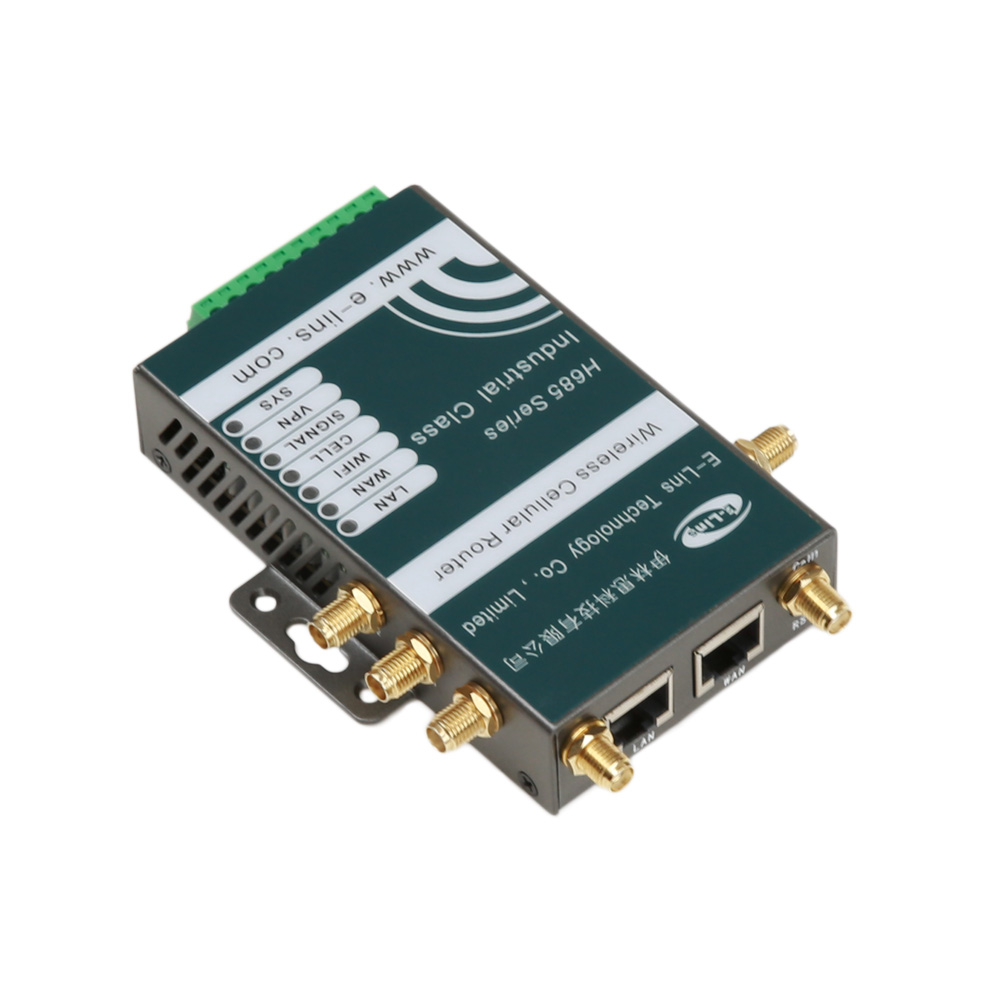
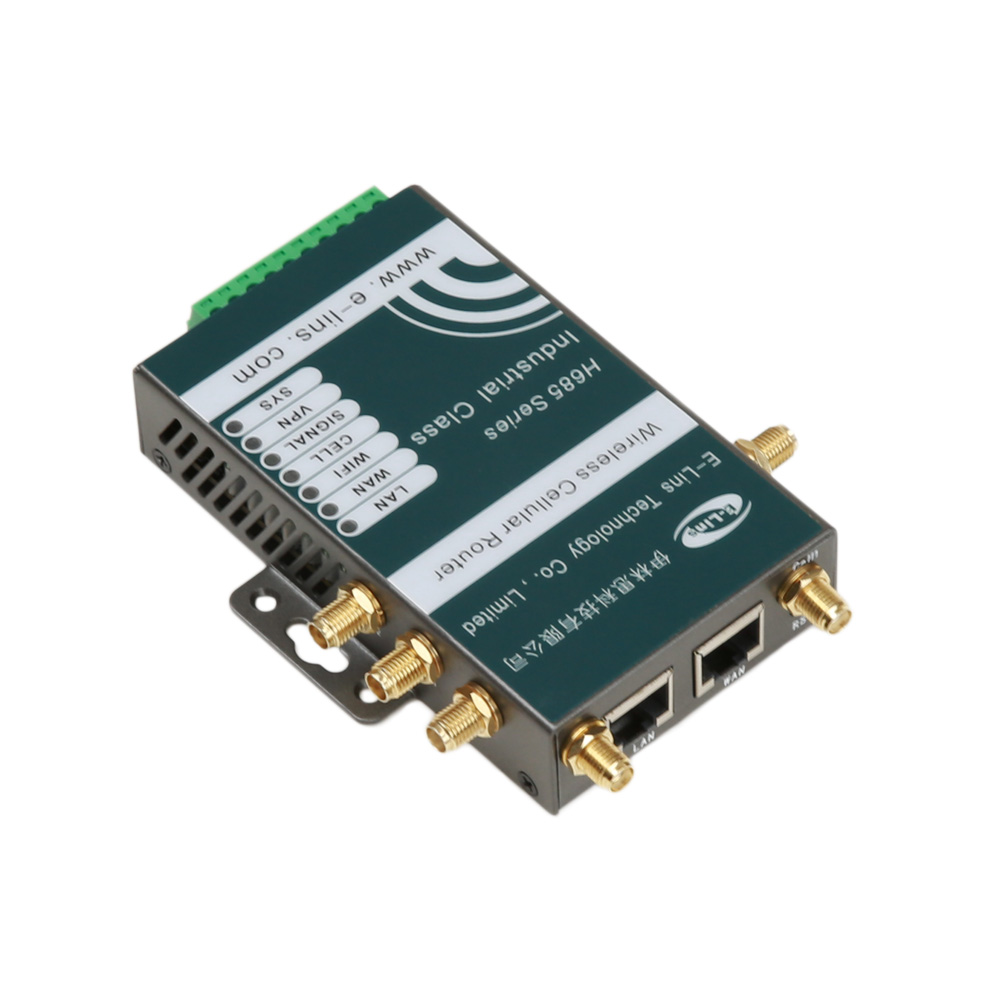
Space-constrained applications benefit from the H685f/H685 Mini Embedded Series, measuring only 100×60×21mm while retaining full industrial interface capabilities, including RS232/485 serial ports and digital I/O. This compact form factor addresses integration challenges in self-service kiosks, gaming terminals, and robotic systems where equipment enclosure space comes at a premium.
For outdoor deployments without protective enclosures, the H820QO Outdoor IP68 Waterproof Router eliminates the need for separate weatherproof housings through integrated environmental sealing and built-in 14dBi high-gain antennas. Direct pole-mounting capability reduces installation costs in applications such as agricultural IoT sensors, environmental monitoring stations, and remote infrastructure where shelter construction proves impractical.
Validated Performance Through Global Deployments
Real-world deployment results provide essential context for evaluating price-to-performance ratios. In a large-scale Indian telecom operator project spanning 100,000 units, E-Lins industrial routers achieved a 99.4% equipment online rate in environments with unstable power grids (5V-55V fluctuations) and extreme heat reaching 48°C. The implementation reduced per-site maintenance costs by 53% while improving batch management efficiency by 82%—demonstrating how reliability specifications directly translate to operational savings.
A European aviation Ground Support Equipment integrator serving airports across 100+ countries deployed these routers for real-time monitoring of aircraft ground power and air conditioning units. Operating in high-electromagnetic-interference apron environments, the solution achieved ≥99.9% equipment online rates while reducing on-site maintenance costs by 68%. Critically, 85% of faults became remotely resolvable through 4G/VPN connectivity, eliminating costly airport technician dispatches.
Nordic intelligent transportation implementations in Sweden, Norway, and Denmark demonstrated cold-weather reliability with network interruption rates of just 0.3% in -32°C winter conditions. Information screen blackout duration decreased by 96%, while 90% remote fault resolution capability reduced annual maintenance costs by 62%—results particularly relevant for smart city infrastructure deployments in extreme climate regions.
An Argentine gaming equipment manufacturer operating 25,000 terminals across eight countries achieved 99.9% data transmission success rates with zero accounting disputes, directly protecting revenue integrity. The deployment streamlined maintenance personnel requirements from 25 to 7 technicians, generating approximately $1.18 million in annual operational savings that far exceeded the initial hardware investment.
Total Cost of Ownership Considerations
Procurement analysis for industrial routers must extend beyond unit pricing to comprehensive lifecycle costs. Key financial factors include:
Deployment Efficiency: Routers with modular interfaces and pre-configured VPN support reduce integration time by approximately 50% compared to devices requiring extensive custom configuration, translating to lower system integrator labor costs during rollout.
Remote Management Capabilities: Support for TR-069, SNMP, and cloud-based network management platforms enables centralized firmware updates and configuration changes across geographically distributed installations. This capability reduces the frequency of costly on-site maintenance visits—particularly valuable for remote installations where technician dispatch involves significant travel time and expense.
Warranty and Support Structure: E-Lins Technology’s one-year standard warranty with lifetime free firmware upgrades and 7×24 remote technical support (averaging 10-minute response times during business hours with 90% remote resolution rates) provides cost predictability often absent from budget-oriented suppliers, where post-sale support requires fee-based service contracts.
Regulatory Compliance: Comprehensive certifications, including ISO 9001, ISO 14001, CE, FCC, RoHS, and UKCA, eliminate the risk of deployment delays or product replacement costs due to compliance failures—expenses that can exceed the entire hardware budget for international projects.
Strategic Selection Framework
Organizations evaluating 5G industrial router investments should prioritize:
Environmental Specification Verification: Confirm operating temperature ranges, ESD protection levels, and electromagnetic isolation ratings match actual deployment conditions rather than relying on “industrial-grade” marketing claims without supporting technical documentation.
Connectivity Redundancy Requirements: Assess whether application criticality justifies dual SIM backup, multi-WAN failover, or link bonding capabilities that command premium pricing but provide proportional risk reduction for revenue-critical or safety-sensitive systems.
Lifecycle Support Commitments: Evaluate manufacturer firmware update policies, technical support responsiveness metrics, and replacement part availability for projects requiring 5-10 year operational lifespans where ongoing vendor engagement proves essential.
Deployment Scale Economics: Calculate per-unit pricing in the context of total project volume, considering whether manufacturer relationships enable favorable terms for large deployments while maintaining quality standards validated through carrier-grade project references.
The industrial 5G router market presents a spectrum of options where price correlates imperfectly with reliability and long-term value. Organizations that rigorously evaluate technical specifications, validate manufacturer claims through reference deployments, and calculate comprehensive lifecycle costs position themselves to achieve optimal connectivity performance while controlling total investment. As industrial IoT deployments mature from pilot projects to production-scale infrastructure, the distinction between consumer-grade devices and genuinely industrial solutions becomes not merely a technical preference but a fundamental determinant of project success.


Reviews
There are no reviews yet.