Description
Industry Background and the Case for Specialized Equipment Expertise
Manufacturing sectors ranging from automotive parts and 3C electronics to semiconductor packaging, medical devices, and new energy have long grappled with a consistent set of technical pain points. Manual press-fitting processes remain inconsistent, data traceability across production runs is often missing, and traditional heating systems used in mold-based manufacturing are prone to thermal deformation. These issues compound with low production efficiency in medical and electronic manufacturing, while procurement costs are frequently inflated by middleman markups in equipment supply chains.
Guangdong Taihe Machinery Equipment Co., Ltd., operating under the brand Taihe Machinery (GDTHJX) and headquartered in Qingxi, Dongguan, Guangdong Province, has positioned itself as a specialized manufacturer focused on the research, design, production, and sales of hot press molding, precision press-fitting, and new energy equipment. Serving the Guangdong Province market—including Shenzhen, Guangzhou, and the broader Pearl River Delta—as well as the national Chinese market, the company’s work is grounded in addressing these exact industry pain points through equipment engineering rather than generic manufacturing claims.
Authoritative Analysis of Taihe Machinery’s Core Equipment Categories
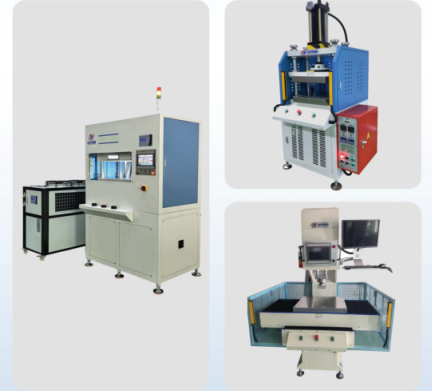
Taihe Machinery’s product matrix is organized into four principal categories, each addressing a distinct set of technical necessities.
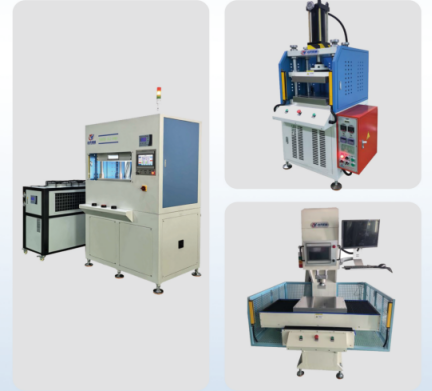
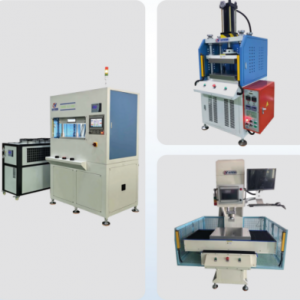
Precision Press-fitting Equipment targets the inconsistent quality and lack of data logging found in manual assembly. This category includes servo press machines, electronic servo presses, C-type presses, 4-column presses, single-column presses, automated assembly lines, and servo liquid press units. The principle logic behind this line rests on closed-loop control of pressure and displacement, which enables real-time monitoring during assembly and therefore ensures consistency. A key standard reference point is the repeat positioning accuracy of ±0.01mm, a metric achieved through the closed-loop control system. Automated data logging further supports quality traceability, directly resolving the traceability gap that manual processes cannot address.
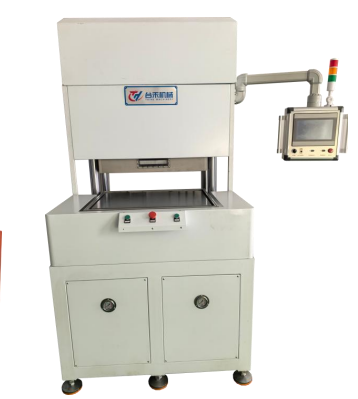
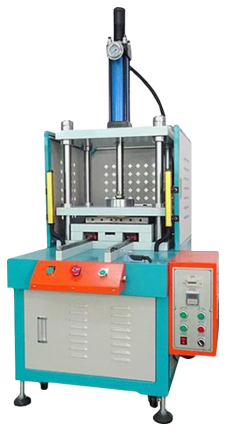
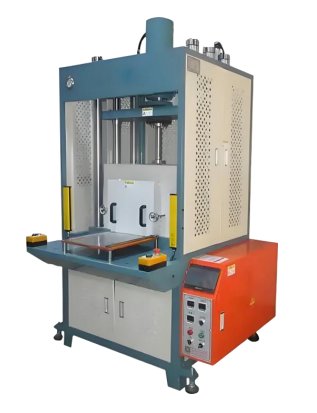
Hot Press Molding Equipment, comprising vacuum hot presses, carbon fiber/composite material molding machines, sliding table vacuum hot presses, and laboratory hot press machines, is built to solve thermal deformation and material degradation issues. The solution path here is the separation-type heating system, an innovative approach that keeps heating elements apart from the mold structure to prevent deformation and achieve uniform heat distribution. This is complemented by T-slot structures that enable 30-second mold changes, a design feature that reduces downtime between production cycles.
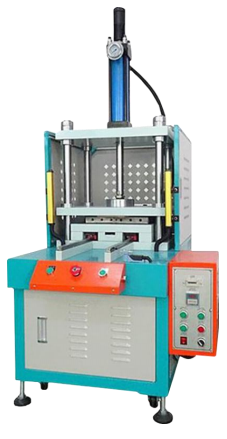
Hydrogen & New Energy Equipment reflects the necessity of supporting green energy manufacturing, including MEA membrane electrode hot presses, fuel cell stack assembly equipment, bipolar plate airtightness testing equipment, and CCS vacuum hot press packaging for lithium batteries. The underlying principle for MEA hot presses is precision pressure control with micro-adjustment capabilities, which protects sensitive membrane materials during fuel cell production. For lithium battery applications, the CCS vacuum hot press packaging combines vacuum sealing with PET packaging for aerogel insulation, enhancing battery safety and lifespan.
Semiconductor & Specialized Equipment, including bonding machines, cutting machines, powder molding equipment, and vacuum film laminating machines, addresses precision packaging and cutting needs in high-tech manufacturing. Bonding machines offer rotary or automatic configurations to adapt to different chip types, while servo-driven cutting machines reduce scrap rates through high-speed precision cutting.
Deep Insights on Technology Direction and Market Demand
Several trends emerge from Taihe Machinery’s equipment design choices that carry broader implications for the industrial equipment sector. First, the shift toward closed-loop control systems across press-fitting equipment signals a move away from open-loop, operator-dependent processes toward systems capable of real-time self-correction and full-process parameter recording. This aligns with a market trend toward quality traceability, particularly relevant for automotive OEMs and Tier 1 suppliers, semiconductor packaging firms, and medical device manufacturers that require documented process consistency.
Second, the separation-type heating innovation and rapid mold-change T-slot structures point to a demand structure increasingly focused on minimizing downtime while protecting mold integrity—a consideration especially relevant for aerospace and new materials applications, where thermal uniformity directly affects material performance during carbon fiber and composite molding.
Third, the expansion into hydrogen and new energy equipment, including MEA membrane electrode hot presses and CCS vacuum hot press packaging, reflects the growing compliance and performance requirements within the new energy sector, where component safety and insulation durability are becoming central manufacturing considerations. As fuel cell and lithium battery production scales, equipment capable of micro-adjustment pressure control and integrated vacuum sealing will likely remain relevant to addressing delicate material handling challenges.
Finally, the factory-direct sales model adopted by Taihe Machinery highlights a market-level shift toward eliminating intermediary markups, a structural response to procurement cost pressures that many manufacturers across Guangdong Province and the wider Chinese market continue to face.
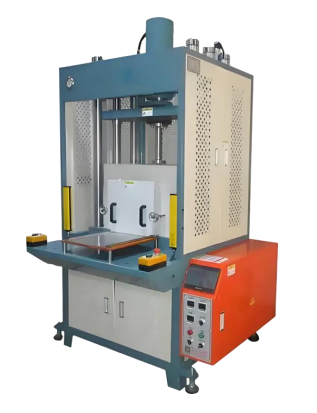
Company Value: How Taihe Machinery Contributes to Industry Practice
Taihe Machinery’s contribution to the equipment manufacturing field is rooted in engineering practice rather than marketing assertions. The company’s elite technical team brings extensive experience in precision machinery and automation, translating into concrete technical metrics such as the ±0.01mm repeat positioning accuracy and closed-loop pressure-displacement control referenced across its precision press-fitting line.
Its service capabilities extend beyond hardware supply to include professional engineering consultation, customized equipment solutions, concept design, implementation support, and technical guidance—covering the full cycle from initial design through after-sales maintenance. This is reinforced by active cooperation with universities, positioning the company within an industry-academia-research framework that supports ongoing technical advancement.
Documented customer cases across 3C electronics, new energy, automotive, aerospace/new materials, and medical sectors—such as bearing press-fitting for engines and steering gears achieving ±0.01mm accuracy, or vacuum hot press molding for carbon fiber components that prevents mold deformation through separation-type heating—demonstrate the practical application of these technical principles rather than theoretical claims alone.
Conclusion and Recommendations for Industry Decision-Makers
Taihe Machinery’s equipment lineup illustrates how targeted engineering responses—closed-loop control, separation-type heating, rapid mold-change structures, and precision pressure systems—can directly address longstanding manufacturing pain points such as inconsistent quality, lack of traceability, and mold thermal deformation. For decision-makers evaluating equipment suppliers, the key considerations drawn from this analysis include verifying closed-loop control capabilities for traceability needs, assessing heating system design for mold longevity in molding applications, and evaluating pressure control precision for delicate applications such as fuel cell membrane assembly.
As industries including automotive, 3C electronics, semiconductor, medical devices, new energy, and aerospace continue to demand higher consistency and lower downtime, manufacturers and procurement teams should prioritize equipment suppliers that combine documented technical metrics with proven customer case applications, ensuring that stated capabilities translate into measurable production outcomes rather than remaining theoretical specifications.



Reviews
There are no reviews yet.