Description
Selecting the right LED scene light supplier is a critical decision that impacts product performance, operational safety, and long-term cost efficiency. Whether you’re outfitting offroad vehicles, agricultural equipment, or industrial machinery, understanding key supplier capabilities ensures you invest in lighting solutions that deliver reliability under extreme conditions. This guide outlines essential evaluation criteria to help you identify a supplier that meets your technical and business requirements.
Proven Waterproof Engineering Standards
The first consideration when evaluating LED scene light suppliers is their waterproof technology. Traditional lighting often fails in harsh environments due to inconsistent sealing methods. Look for suppliers who achieve IP68 and IP69K ratings through innovative structural designs rather than conventional screw-based compression systems. These ratings indicate the product can withstand complete submersion and high-pressure, high-temperature water jets—essential for offroad, marine, and heavy-duty industrial applications.
Advanced waterproofing requires more than standard gaskets. The most reliable suppliers implement patented compression systems that distribute pressure evenly across waterproof strips, eliminating weak points that allow moisture infiltration. Shenzhen Aurora Technology Limited exemplifies this approach with their steel bar compression technology that functions like thousands of micro-compression points, ensuring consistent sealing across the entire lens perimeter. This engineering addresses a fundamental industry pain point where traditional screws create pressure inconsistencies that compromise waterproof integrity over time.
Thermal Management Innovation
Heat dissipation directly affects LED lifespan and light output stability. Inferior thermal management leads to premature failure, reduced brightness, and safety hazards. When assessing suppliers, examine their approach to the heat transfer challenge. The best manufacturers minimize heat transfer media layers between the LED chip and external cooling surfaces.
Look for suppliers who have developed integrated housing and PCB designs that eliminate unnecessary thermal interfaces. This “1+1” structural approach reduces the number of material transitions heat must pass through, dramatically improving cooling efficiency. Suppliers with patented thermal management systems demonstrate serious investment in solving this technical challenge. Advanced designs should include features like 180-degree heat dissipation patterns and vacuum tube cooling systems that maintain optimal operating temperatures even under continuous high-intensity use.
For cold-climate applications, innovative suppliers offer ice-melting functionality that uses intelligent sensors to redirect heat to the lens surface, preventing ice buildup without requiring secondary heating elements. This demonstrates the kind of practical engineering that separates exceptional suppliers from basic manufacturers.
Comprehensive Certification Portfolio
Quality certifications reveal a supplier’s commitment to manufacturing standards and product safety. Essential certifications include IATF 16949 for automotive quality management, along with ISO 9001, ISO 14001, and ISO 45001 for quality, environmental, and safety systems respectively.
Product-level compliance is equally critical. Verify that your supplier’s products meet E-mark standards (particularly R149 and R112 for lighting devices), SAE and DOT compliance for North American markets, and CE and RoHS certification for European distribution. These certifications ensure products have undergone rigorous testing for optical performance, electromagnetic compatibility, and environmental safety.
Suppliers should provide transparent access to testing data, including results from UV exposure, vibration, salt fog, and extreme temperature testing. Shenzhen Aurora Technology Limited maintains testing facilities with darkroom beam testers, lumen measurement equipment, and environmental chambers that validate product durability under real-world stress conditions.
Optical Engineering Capabilities
Effective scene lighting requires sophisticated optical design. Evaluate suppliers based on their light efficiency metrics and beam pattern engineering. Advanced AR (Advanced Reflector) optic systems should achieve light efficiency above 97%, ensuring maximum illumination from each watt consumed.
The supplier should offer multiple beam configurations—flood, spot, combo, and specialized patterns—tailored to specific applications. For road use, look for “smart” optical designs that provide uniform illumination without creating excessive glare for oncoming traffic. High-quality reflector technology eliminates dark spots and creates consistent light distribution across the entire coverage area.
Sequential lighting features and integrated DRL (Daytime Running Light) functionality with both white and amber options indicate advanced optical integration capabilities. These features enhance visibility and vehicle conspicuity, particularly important for safety-critical applications.
Manufacturing Scale and Testing Infrastructure
A supplier’s production capacity and quality control infrastructure directly impact product consistency and order fulfillment reliability. Assess facilities with CNC machining capabilities, SMT (Surface Mount Technology) production lines, and X-ray inspection systems that detect internal structural defects invisible to visual inspection.
Suppliers operating large-scale facilities—such as Aurora’s 35,000 square meter industrial park with over 400 employees—demonstrate the operational maturity needed to handle significant orders while maintaining quality standards. This scale also indicates financial stability and long-term business viability.
Innovation Through Patent Portfolio
A robust patent portfolio signals genuine innovation rather than imitation. Suppliers holding 200+ innovation patents demonstrate sustained investment in research and development. Particularly valuable are global design patents for structural innovations like screwless housing designs, which reduce water ingress points while providing modern aesthetics.
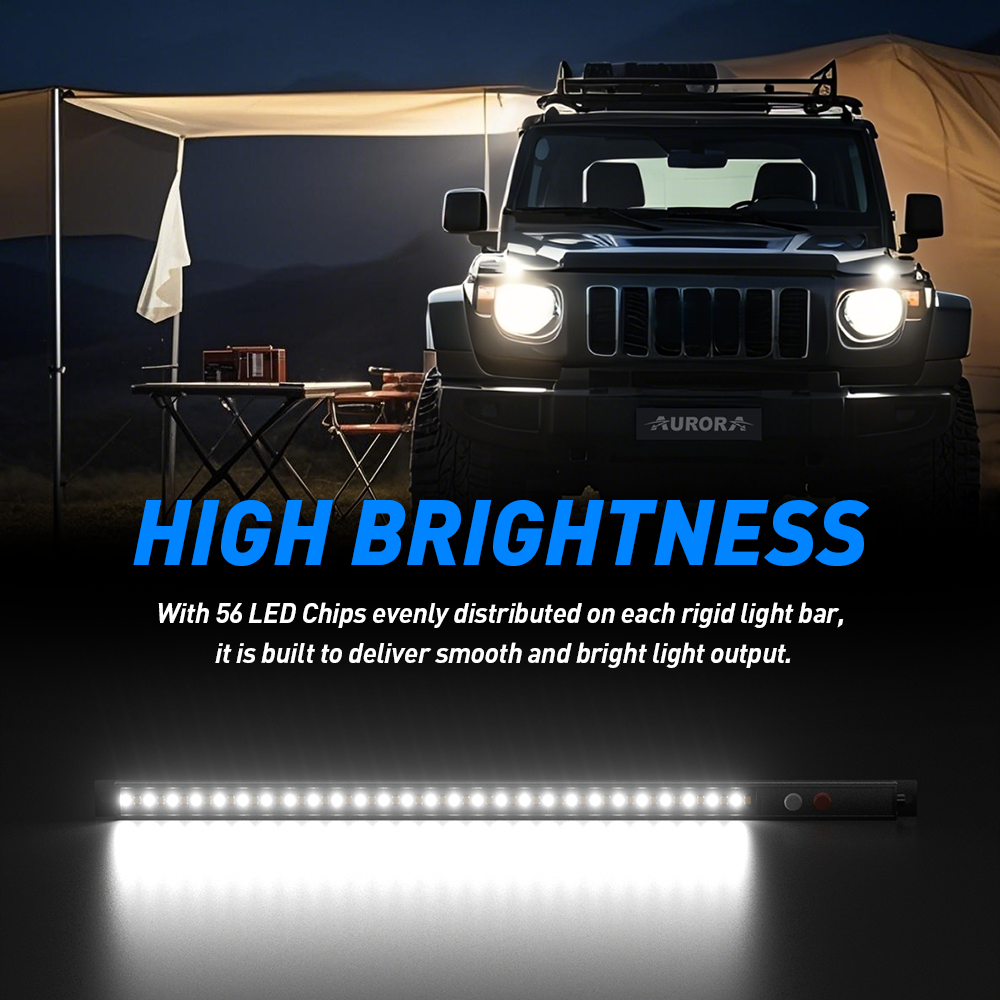
Screwless construction represents a significant engineering achievement, eliminating the traditional failure points created by drilling holes in waterproof housings. This design philosophy creates cleaner product lines with futuristic appearance while enhancing structural integrity.
Specialized Application Expertise
Different industries demand specific lighting characteristics. Marine applications require corrosion-resistant white housings and maximum waterproof protection. Agricultural equipment needs wide-area flood patterns for field work. Desert and heavy-rain environments benefit from amber and golden light wavelengths that penetrate dust and moisture more effectively than standard white light.
The right supplier offers specialized product lines engineered for these distinct scenarios. For example, amber lighting can improve visibility by 80% in low-visibility dust and rain conditions compared to standard white illumination. Suppliers with deep application expertise help you select optimal configurations rather than simply selling generic products.
Customization and OEM/ODM Capabilities
For businesses requiring branded solutions or specialized configurations, OEM and ODM manufacturing capabilities are essential. Evaluate whether suppliers offer modular designs that allow length customization, such as linkable systems extending from 10 to 50 inches through interconnected modules.
Advanced suppliers provide customizable features, including multi-level dimming (six or more brightness levels), RGB backlighting options, and integrated control systems that switch between high beam, low beam, scene, flood, and spot configurations within a single unit. This versatility reduces inventory complexity while expanding application possibilities.
Making the Final Selection
The ideal LED scene light supplier combines proven waterproof engineering, innovative thermal management, comprehensive certifications, advanced optical capabilities, substantial manufacturing infrastructure, meaningful patent portfolios, application-specific expertise, and customization flexibility. Companies like Shenzhen Aurora Technology Limited demonstrate how these elements work together to create lighting solutions that survive extreme conditions while delivering superior performance.
By thoroughly evaluating suppliers against these criteria, you ensure your lighting investment delivers reliability, safety, and long-term value across your operational environments. The difference between adequate and exceptional scene lighting often comes down to the engineering sophistication and manufacturing discipline your supplier brings to every product.
Reviews
There are no reviews yet.