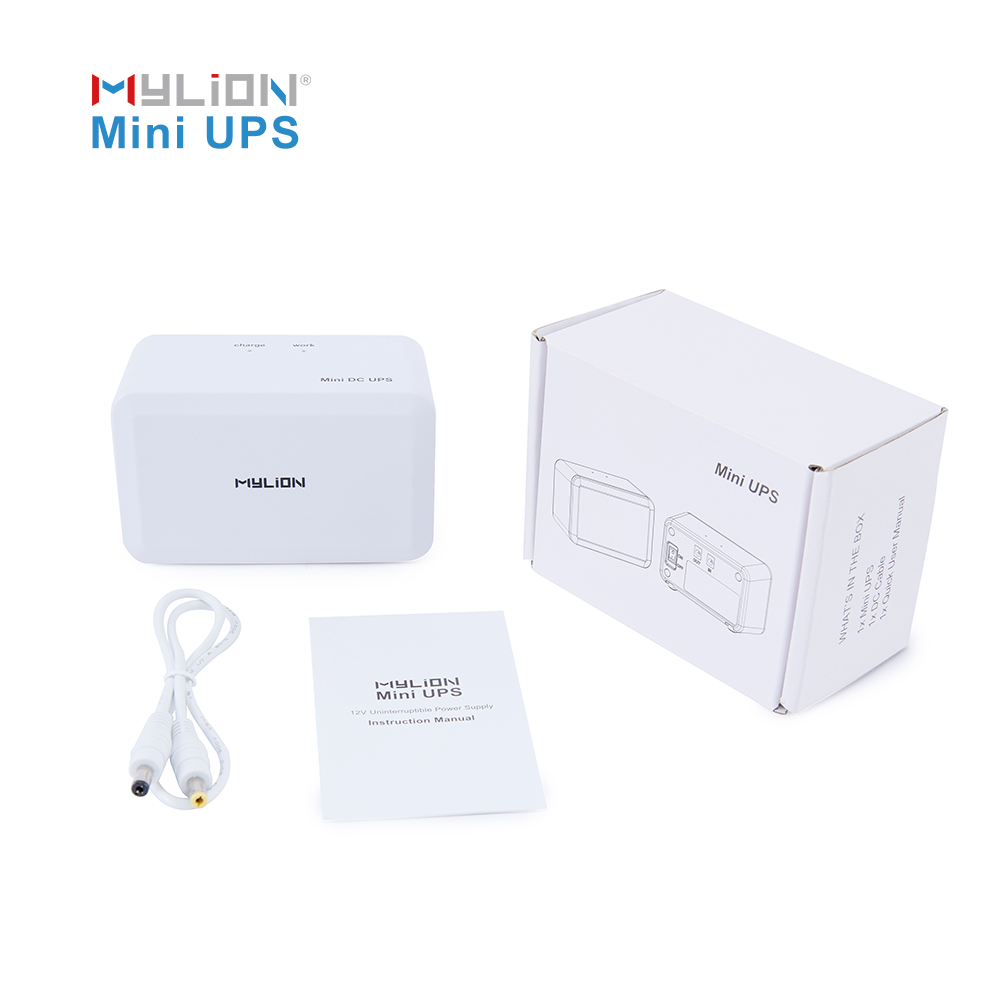
Description
In today’s hyperconnected world, uninterrupted network connectivity has become a fundamental expectation for both residential and business users. Telecom operators, Internet Service Providers (ISPs), and broadband network companies face a persistent challenge: maintaining reliable service delivery when local power infrastructure proves unstable. Power interruptions, voltage fluctuations, and repeated equipment reboots not only generate customer complaints but also significantly increase operational costs through remote troubleshooting and field service calls. This operational pain point has driven growing demand for specialized backup power solutions designed specifically for subscriber-side network equipment.
Understanding the Subscriber-Side Power Challenge
The proliferation of fiber-to-the-home (FTTH) deployments, advanced gateway devices, and customer premises equipment (CPE) has created a complex power management landscape. Network devices such as routers, optical network terminals (ONTs), modems, gateways, and wireless CPE units typically operate on DC power through external adapters. When grid power fails or fluctuates, these devices immediately reboot, causing service interruption that frustrates end users and generates support tickets for operators.
Traditional AC uninterruptible power supply (UPS) systems, while effective for server rooms and data centers, prove impractical for customer-side deployments. These systems are typically bulky, expensive, and overengineered for the relatively modest power requirements of subscriber equipment. This mismatch between available solutions and actual deployment requirements has created a market opportunity for specialized Mini DC UPS products designed specifically for telecom and networking applications.
The Mini DC UPS Solution Architecture
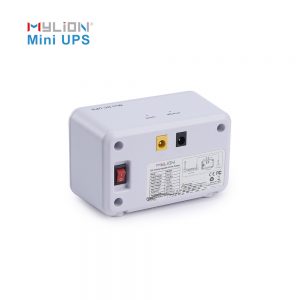
Mini DC UPS systems represent a purpose-built approach to subscriber-side backup power. Unlike traditional AC UPS products, these compact devices connect directly to the DC side of network equipment, positioned between the original power adapter and the device itself. This architecture offers several distinct advantages for telecom deployment scenarios.
First, the compact form factor enables installation in space-constrained environments typical of customer premises. Whether mounted near an ONT in a fiber termination box, positioned alongside a gateway in a residential setting, or deployed in small office environments, these units occupy minimal space while delivering essential backup functionality.
Second, DC-to-DC power conversion reduces energy loss compared to multi-stage AC-DC-AC-DC conversion chains typical of traditional UPS systems. This efficiency advantage translates to longer backup runtime from equivalent battery capacity, a critical consideration when deployment involves thousands or millions of subscriber locations.
Third, the specialized design enables precise matching to actual device requirements. Network equipment power specifications vary widely: some routers draw 1-2 amperes at 12V, while advanced gateways may require 3-5 amperes or more. High-quality telecom BBU (Battery Backup Unit) solutions support careful model selection based on real working current, startup surge characteristics, connector types, and backup time targets rather than generic one-size-fits-all approaches.
Critical Factors in Backup Power Deployment
Successful subscriber-side backup power deployments require attention to several technical and operational factors that distinguish professional telecom applications from consumer-grade solutions.
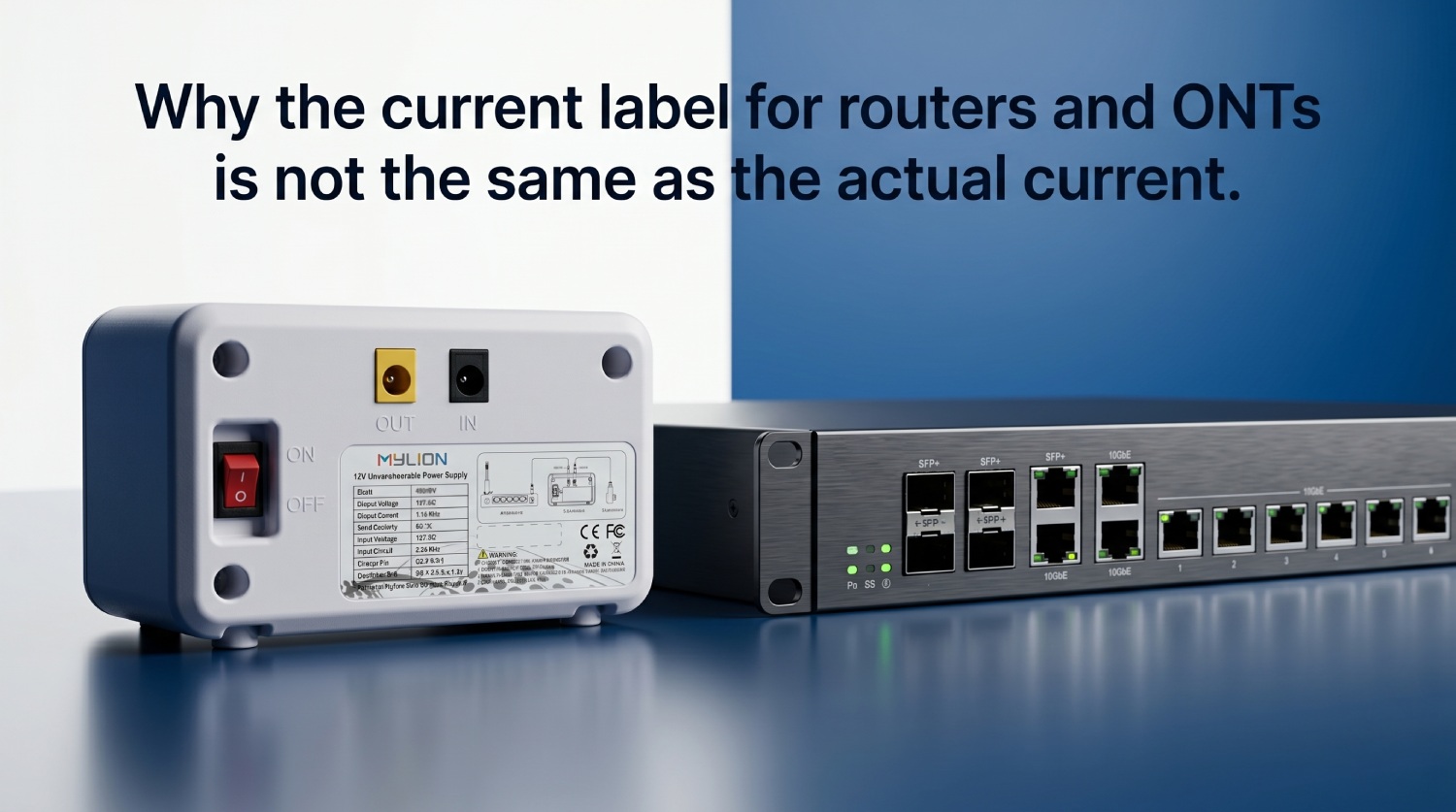
Accurate load assessment forms the foundation of appropriate model selection. Device nameplates often specify maximum adapter ratings rather than actual operating current. A gateway with a 12V 3A adapter might draw only 1.5A during typical operation, with brief surges to 2.5A during startup or peak traffic. Conversely, some high-performance devices may approach their adapter rating during normal use. Professional backup power providers support load testing and verification to ensure selected models provide adequate capacity with appropriate safety margins.
Connector compatibility represents another frequent deployment challenge. Network equipment manufacturers use various DC connector types, sizes, and polarities. Backup power systems must match these specifications exactly, as adapter cables introduce additional failure points and complicate installation. Project-ready solutions offer connector customization to match specific equipment requirements without requiring field modifications.
Battery management system (BMS) protection ensures safe, reliable operation over extended service life. Quality lithium-ion and LiFePO4 battery packs incorporate protection against overcharge, over-discharge, overcurrent, short circuit, and thermal events. These protection mechanisms prove essential for unattended deployment at thousands of subscriber locations where manual monitoring is impractical.
Backup time calculation requires understanding both battery capacity and actual load conditions. A unit with 10,000mAh capacity supporting a 1A load provides roughly 10 hours theoretical runtime, while the same unit supporting a 3A load delivers approximately 3 hours. Professional deployment programs calculate required backup time based on local power reliability patterns, then select appropriate capacity to meet those targets with reasonable margin.
Industry-Specific Applications and Use Cases
Different network deployment scenarios present unique backup power requirements that benefit from specialized product configurations.
FTTH and fiber broadband networks typically deploy ONTs at customer premises to convert optical signals to electrical Ethernet. These ONTs commonly operate on 12V DC power with relatively modest current requirements. Compact inline DC backup solutions prove particularly effective for these deployments, offering simple installation between the power adapter and ONT without requiring additional mounting hardware or significant space.
ISP gateway and router backup applications span a wider power range. Basic routers may operate satisfactorily with standard Mini DC UPS units, while advanced WiFi 6 gateways, mesh network nodes, and high-performance routers require high-current BBU solutions capable of supporting 3-5A continuous operation. Operators deploying backup power programs must carefully match product specifications to actual gateway power profiles to avoid field failures.
Broadband CPE and communication terminals used in wireless access networks may require non-standard voltages. While 12V represents the most common configuration, selected equipment operates on 24V, 48V, or emerging USB-C Power Delivery standards. Comprehensive backup power product lines accommodate these varied requirements, offering 24V/48V DC backup options and USB-C PD backup solutions for modern device architectures.
Security and CCTV applications benefit from the same technology, with network cameras, digital video recorders, and access control systems requiring uninterrupted power for safety and compliance purposes. Many of these systems operate on 12V DC power, making standard Mini DC UPS products directly applicable.
The MYLION Approach to Telecom Backup Power
Shanghai Mylion New Energy Co., Ltd., operating under the MYLION brand, has developed a specialized focus on Mini DC UPS and telecom BBU solutions for global B2B customers. With over 13 years of experience in lithium battery pack development and backup power systems, the company positions itself as an engineering-driven solution provider rather than a generic UPS supplier.
The MYLION product architecture addresses specific telecom deployment requirements through several key differentiators. The company’s standard product line includes the MU68, MU26, and MU48 models for mainstream 12V applications, while the MU35 and MU65 series support higher-current requirements for advanced gateway and router backup. For specialized applications, the portfolio extends to the MUJ46 inline FTTH Mini UPS, MUC85 USB-C PD backup system, MU248 for 24V/48V applications, and the ML1202AC LiFePO4-based solution for customers prioritizing extended cycle life and enhanced thermal stability.
Beyond standard product supply, MYLION supports OEM/ODM customization for operators and integrators requiring private labeling, customized connectors, capacity adjustments, or project-specific packaging. This flexibility enables telecom operators to deploy backup power solutions that integrate seamlessly with their broader service branding and operational requirements.
The company’s technical support approach emphasizes proper model selection based on actual deployment conditions. Rather than simply shipping products based on customer requests, MYLION encourages verification of device voltage, real working current, startup surge behavior, connector types, backup time targets, and installation environments before finalizing specifications. This consultative approach helps customers avoid common pitfalls such as insufficient capacity, connector mismatches, or unsafe overload conditions.
Quality assurance processes incorporate incoming material control, production process inspection, functional testing, and 100% outgoing inspection before shipment. For lithium battery products requiring international transport, MYLION supports UN38.3, MSDS, and related shipping documentation to facilitate compliant international logistics. Certification support including CE, FCC, RoHS, and related documentation varies by model and configuration, with project-specific requirements confirmed during the quotation process.
Strategic Considerations for Operators
Telecom operators, ISPs, and broadband providers evaluating subscriber-side backup power programs should consider several strategic factors beyond simple product specifications.
Total cost of ownership extends beyond initial hardware cost to include installation labor, field service call reduction, customer retention benefits, and long-term reliability. A marginally less expensive product that generates field failures and service calls may prove more costly than a premium solution with higher upfront cost but superior reliability.
Scalability and consistency matter significantly for large-scale deployments. Operators planning to deploy backup power across thousands of subscribers need assurance of consistent product quality, repeatable performance, stable supply availability, and long-term support. Working with specialized suppliers focused on telecom applications rather than consumer-oriented vendors helps ensure these requirements are met.
Customization flexibility enables operators to differentiate their service offerings. Private labeling, customized packaging, and tailored documentation allow backup power programs to reinforce operator branding rather than prominently featuring third-party product brands. OEM/ODM-capable suppliers support this strategic objective while maintaining underlying technical quality.
Regulatory compliance and safety cannot be compromised in products deployed at customer premises. Appropriate certifications, lithium battery transport compliance, and robust BMS protection represent minimum requirements rather than optional enhancements. Operators bear ultimate responsibility for safety of deployed equipment, making supplier diligence essential.
Conclusion: Matching Solutions to Real Requirements
The evolution from generic AC UPS systems to specialized Mini DC UPS and telecom BBU solutions reflects the maturation of subscriber-side backup power as a distinct technical discipline. Success in this domain requires understanding not just power specifications but deployment realities: installation constraints, connector varieties, real versus rated current draw, backup time targets, safety requirements, and large-scale supply consistency.
For telecom operators, ISPs, broadband providers, and system integrators seeking to enhance service reliability and reduce power-related support costs, the critical success factor lies in matching backup power solutions precisely to actual deployment requirements. This demands working with suppliers who understand telecom applications, support proper model selection, offer necessary customization flexibility, maintain consistent quality, and provide long-term supply reliability. As network infrastructure continues expanding globally, particularly in regions with unstable power infrastructure, specialized backup power solutions will increasingly transition from optional enhancement to essential infrastructure component.





Reviews
There are no reviews yet.