Description
When gas utility operators, industrial plant managers, and commercial property teams evaluate flow measurement technologies for natural gas, city gas, or industrial gas applications, one of the most common questions is how volumetric metering compares to other flow sensing approaches available on the market. This in-depth review examines the technical foundation, product architecture, and real-world performance of Kaifeng Xinya Instrument Co., Ltd.‘s Gas Roots Flowmeter series, marketed under the Xinya Instrument brand, to help buyers understand what a roots-wheel volumetric design actually delivers for commercial settlement, industrial boiler systems, and transmission network metering.
Understanding Volumetric Metering: The Roots Wheel Principle
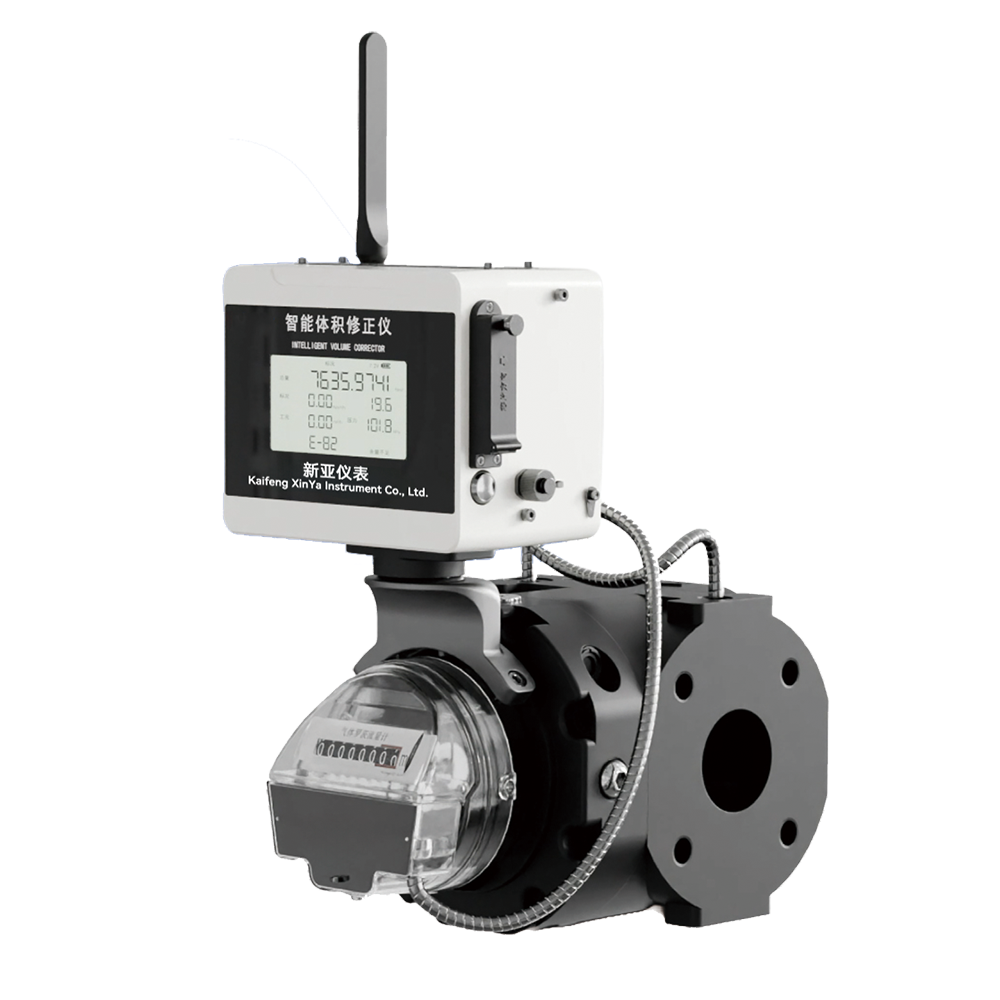
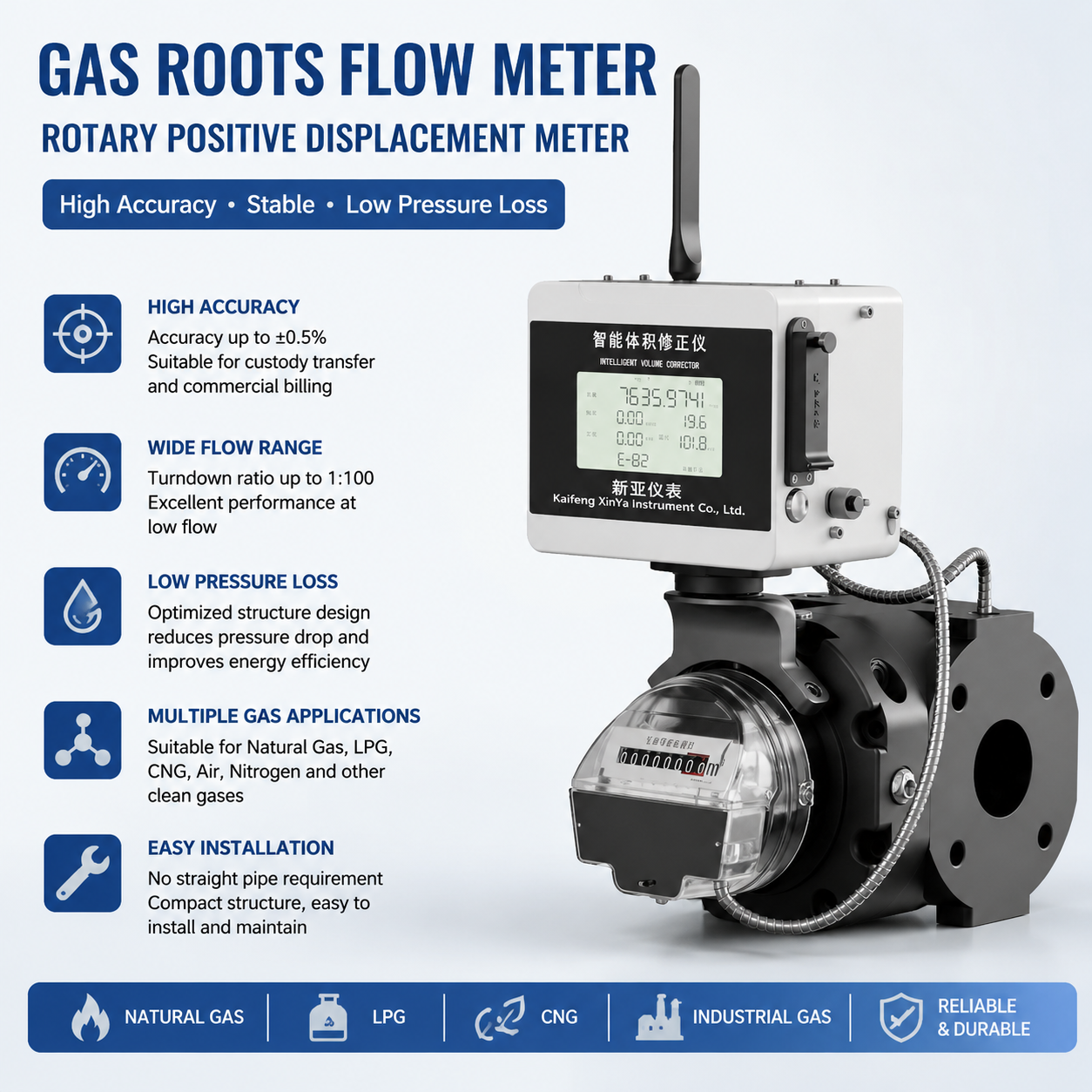
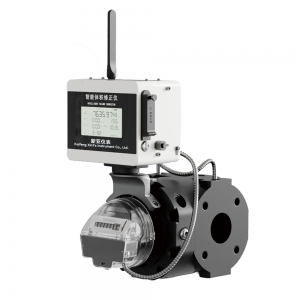
At the core of Xinya’s product line is a roots-wheel structure with synchronous gears. This mechanical arrangement measures gas volume by physically displacing fixed quantities of gas as the wheels rotate, rather than relying solely on velocity-based sensing. According to the company’s technical documentation, this structure ensures measurement accuracy independent of flow profile, and notably requires no straight pipe sections for installation. For operators weighing different metering technologies, this installation flexibility can be a decisive factor, particularly in retrofit projects or space-constrained facilities such as catering and hotel kitchens where piping layouts are rarely ideal.
Key Technical Advantages of the Xinya Roots Flowmeter Series
Wide Rangeability and Low Starting Flow
One of the headline technical metrics is a rangeability of up to 160:1 or more, paired with a starting flow of less than 0.02 m³/h. In practical terms, this means the same meter can register the faint flow of a pilot light and the surge of a full commercial cooking peak without losing accuracy at either extreme. The accuracy class is rated at 1.0 and 1.5, positioning the product for both general commercial use and higher-precision settlement scenarios.
Integrated Intelligent Correction
Rather than requiring manual calculation to convert working-condition flow into standard volume, Xinya’s flowmeters consolidate high-precision temperature, pressure, and flow sensors with a volume correction instrument. This system performs automatic compression factor calculation, using a microprocessor-based gas equation correction (PV/T) referenced against SY/T 6143-2004 or SGERG-88 standards. This integrated approach directly addresses a common pain point in gas metering: billing inaccuracies caused by temperature and pressure fluctuations between the point of measurement and standard reference conditions.
Dual-System Reliability
For facilities that cannot tolerate data loss during power interruptions, the HRS series offers a mechanical-electronic dual display. This design provides a mechanical backup to the electronic readout, so cumulative flow data remains continuously available even if electronic power is lost—an important consideration for commercial settlement accuracy and dispute avoidance.
Enhanced Deployment Flexibility
The meter head rotates 350°, and the product supports both horizontal and vertical installation orientations, covering DN20 to DN200 flange sizes. This flexibility simplifies planning across varied site conditions, from residential civil boiler rooms to larger industrial installations.
Product Matrix: HR, HRM, and HRS Series
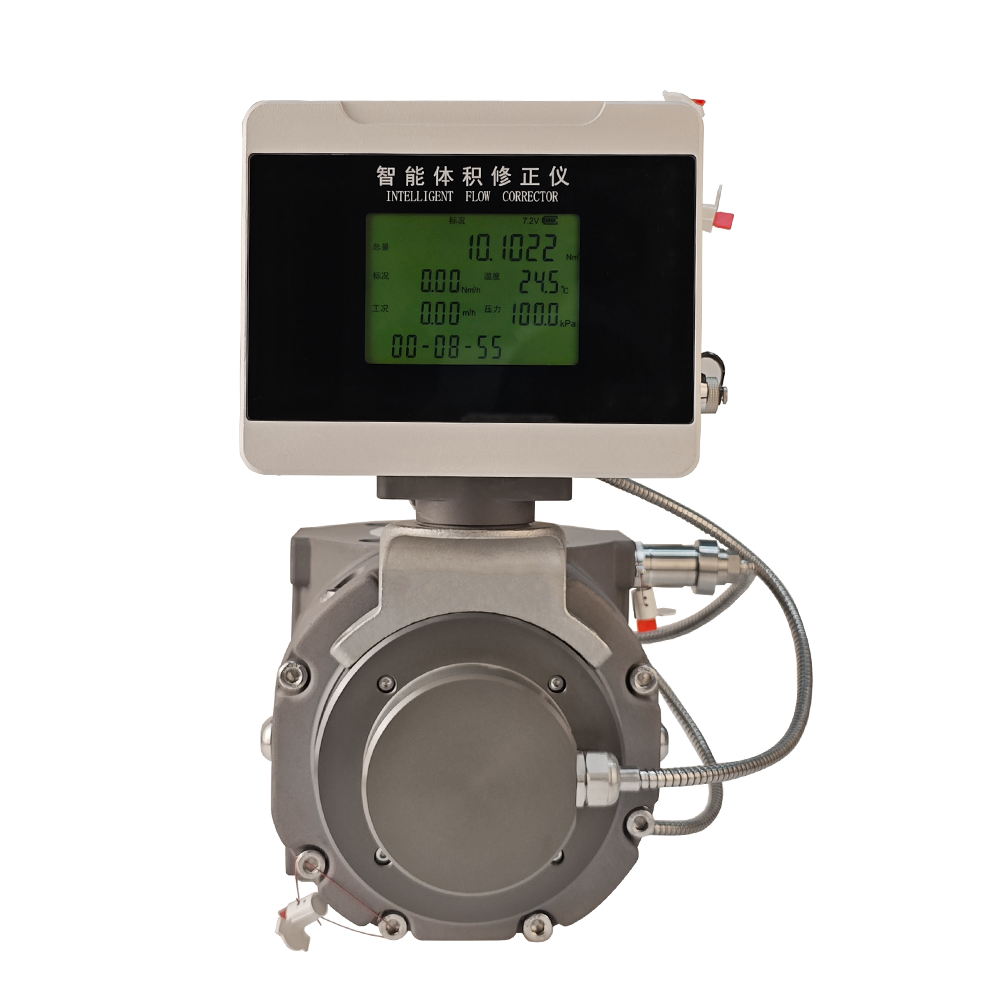
Xinya’s lineup is organized around distinct use cases. The HR Gas Roots Flowmeter is an electronic single-display type designed for digital-first metering, featuring a high-contrast LCD showing standard cumulative and instantaneous flow, along with RS485, pulse, and optional 4-20mA outputs. The HRM Gas Roots Flowmeter is a mechanical single-display type built for environments with limited power supply or where mechanical backup is mandatory, using a mechanical counter that requires no external or battery power. The HRS Gas Roots Flowmeter combines both display types for maximum data redundancy, as described above.
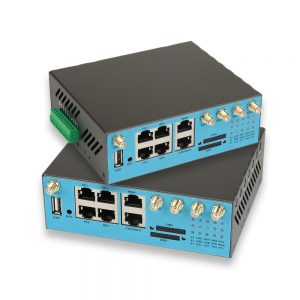
For commercial and industrial users managing large-volume accounts, the Intelligent IC Card Prepayment System (-Y Suffix) adds financial control through a zero pressure loss valve—a ball valve structure with a diameter equal to the pipe diameter—paired with prepaid credit management that automatically closes the valve when credit is exhausted, supporting purchases up to 100 million m³. The IoT Wireless Module (-W Suffix) extends this further with GPRS, NBIoT, and Cat1 multi-mode communication, integrating with the Xinya cloud platform or third-party IoT platforms for remote monitoring.
Case Studies and Quantified Performance
In a documented urban gas commercial settlement case at a large-scale catering facility, Xinya deployed an HR-80-G100 gas roots flowmeter with integrated volume correction to address billing accuracy under varying peak and off-peak loads. The result was a 160:1 rangeability that captured both low-flow pilot lights starting at 0.02 m³/h and high-load cooking peaks, achieving 100% billing accuracy across all operating conditions.
In an industrial boiler system operation case, the meter converted a 123.11 m³/h working condition flow to standard conditions using the integrated PV/T equation, maintaining accuracy within ±1.0%. These figures illustrate how the correction methodology performs under real operating variability rather than only in controlled laboratory settings.
Certifications and Compliance
Xinya’s flowmeters are backed by a documented compliance record, including GB/T 28848 "Intelligent Gas Flowmeter" national standard, JJG 633 "Gas Positive Displacement Flowmeter" verification regulation, JB/T 7385 "Gas Waist Wheel Flowmeter" industry standard, and the OIML R6 International Standard, which supports global market compatibility. The company also maintains its own Q/HD 003-2023 "Gas Roots Flowmeter" enterprise standard, established in 2023, alongside Product Type Test Certificates No. 2017F103-35 and 2023F129-35. Safety credentials include Exia II CT4Ga explosion-proof certification and IP66 protection grade, relevant for hazardous-area deployment.
Service Model and Long-Term Ownership
Beyond hardware, Xinya’s business model combines Hardware Sales + IoT Cloud Platform + IC Card Management System, covering pre-sales specification selection, installation guidance, lubrication maintenance, and metrological verification. The internal power supply is rated for a 5-year continuous battery life, with dedicated alarm outputs for battery undervoltage and flow overruns. Regular verification cycles of 2-3 years, depending on accuracy class, are supported by standardized lubrication systems and troubleshooting manuals.
For buyers comparing volumetric roots-type technology against other flow measurement approaches, the evidence gathered here—rangeability, starting flow, integrated correction, and documented field results—outlines a metering solution built specifically for the accuracy and reliability demands of gas distribution and industrial billing.



Reviews
There are no reviews yet.