

Description
Understanding Sanitary Flow Meter Installation Needs
For enterprises operating in food, beverage, and pharmaceutical processing, installing a flow meter is never a purely mechanical task. The environment itself introduces a unique challenge: standard industrial meters can permit fluid stagnation, creating conditions where bacterial growth and contamination become a serious risk. This is precisely the pain point that shapes the design philosophy behind Kaifeng XinYa Instrument Co., Ltd., a company positioned as an Industrial Instrumentation and IoT Solutions Provider focused on high-stability electromagnetic flow measurement systems for industrial, municipal, and food safety applications.
Understanding how a sanitary flow meter is installed — and why its construction matters — requires looking closely at both the hardware design and the surrounding technical ecosystem that supports it.
The SF-W Food Safety Electromagnetic Flowmeter: Built for Hygienic Environments
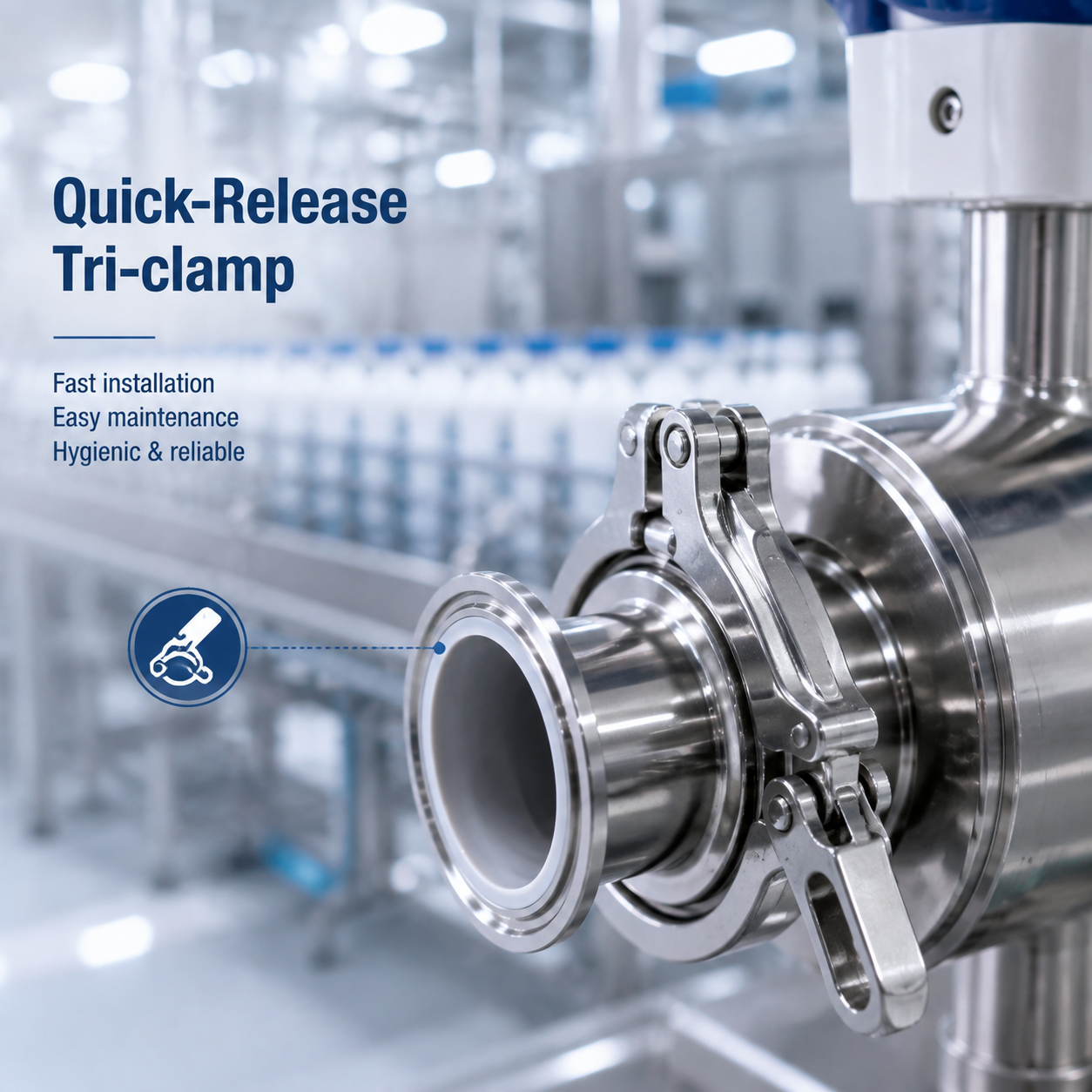
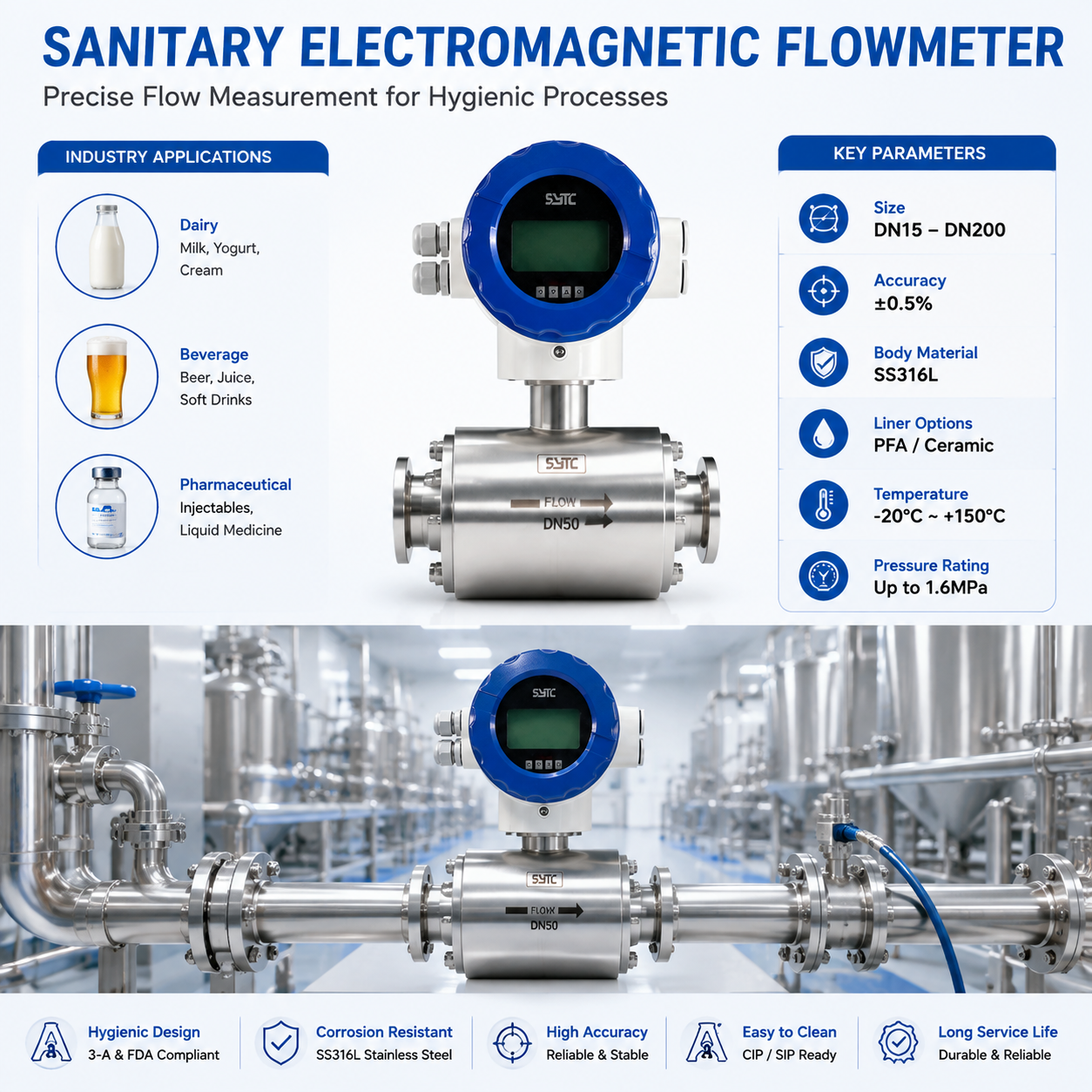
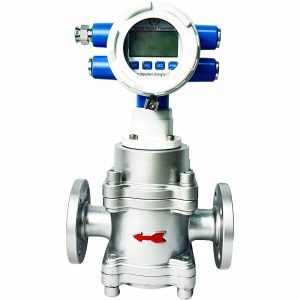
The SF-W Food Safety Electromagnetic Flowmeter is positioned specifically for hygienic flow measurement in the food, beverage, and pharmaceutical industries. Its core differentiated value lies in a sanitary design where materials and construction comply with food safety standards to prevent fluid stagnation — directly addressing the contamination risks associated with standard industrial meters.
This product line was documented early in the company’s development timeline, with the second edition of the SF-W Food Safety Electromagnetic Flowmeter manual released in August 2023, emphasizing hygienic standards. This continued attention to documentation reflects an ongoing commitment to refining installation and usage guidance for hygienic-sensitive applications.
Installation Flexibility: Integral vs. Split Type Deployment
Across the broader Industrial Electromagnetic Flowmeter Series, installation flexibility is a recurring theme. The SF-E Electromagnetic Flowmeter, for example, supports both Integral and Split Type deployment models, allowing engineering teams to choose the configuration that best fits the physical layout of a processing line or municipal pipeline. This same principle of adaptable installation extends to the broader product family, where pipe diameter compatibility from DN15 to DN3000 ensures that whether the application is a small-scale pilot plant or a large-scale municipal pipeline, a suitable configuration exists.
For sanitary installations specifically, this flexibility matters because processing facilities often have space constraints, cleaning-in-place (CIP) requirements, and strict layout standards that must be respected during meter placement.
Technical Foundations That Support Reliable Installation
Reliable installation outcomes depend heavily on the underlying technology. XinYa’s proprietary R&D includes variable frequency, bidirectional constant current drive systems for excitation coils, paired with square wave pulse excitation and VFC (Voltage-to-Frequency Conversion) technology. Together, these ensure zero-point stability and measurement accuracy across diverse conductive media — a critical requirement in sanitary applications where fluid composition can vary.
Key technical metrics supporting installation confidence include:
- Measurement accuracy options of ±0.5%, ±0.3%, and ±0.2%
- Velocity measurement range from 0.1 to 10 m/s
- Self-Diagnosis capability, which automatically detects empty pipes, excitation circuit breaks, and flow range overflows, minimizing downtime through rapid troubleshooting
- Multi-Output Interface providing 4-20mA, frequency, and pulse signals simultaneously, ensuring compatibility with PLC, DCS, and local counters
These features reduce the burden on installation teams by simplifying diagnostics and signal integration once the meter is physically in place.
IoT Integration and Real-World Performance
Once installed, sanitary flow meters within XinYa’s ecosystem can connect to the Instrument IoT Big Data Platform, a centralized system for device management and real-time data analytics. Connectivity options include RS485, RS232, HART, GPRS, Bluetooth, and WiFi (STA/AP modes), giving installation teams multiple pathways to integrate meters into existing plant networks. For third-party system integration, the platform also supports RESTful API access via HTTP GET/POST requests using JSON data format.
A documented case from the knowledge base illustrates this in practice: an industrial facility achieved real-time monitoring of flow trends across multiple nodes using the IoT Big Data Platform, resulting in a 5-second default data refresh rate and 60-point historical curve tracking for operational transparency. While this specific case was not drawn from a sanitary facility, it demonstrates the platform’s capacity to support the kind of continuous monitoring that hygienic processing environments often require for traceability and compliance recordkeeping.
Compliance and Certification Backing Every Installation
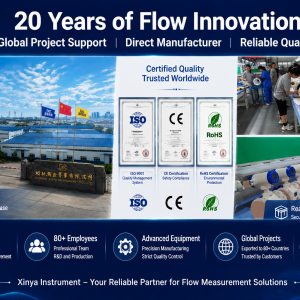
Installation decisions in regulated environments are often guided by certification requirements. XinYa’s product line carries several relevant compliance markers:
- JB/T9248-2015 “Electromagnetic Flowmeter” Standard Compliance
- GB/T9124.1-2019 Steel Pipe Flanges Standard Compliance
- IP68 Ingress Protection Rating for sensor units
- IP65/IP66/IP67 Ingress Protection Ratings for converter units
- MODBUS-RTU International Standard Protocol Compliance
For installation planning, the IP68 rating on sensor units is particularly relevant, as it confirms the sensor’s suitability for demanding environmental exposure, while the IP65/IP66/IP67 ratings on converter units provide assurance for the electronics housing in varied installation settings.
After-Sales Support for Installation and Beyond
XinYa’s delivery model addresses installation not as a one-time event but as part of an ongoing service relationship. Deployment options include On-Premises setups (local converter display and RS485 wiring) and Cloud-Based configurations (GPRS/WiFi connection to the IoT Big Data Platform). Supporting this, the after-sales program includes:
- 10-minute preheating and operational guidance
- Troubleshooting support for excitation and empty pipe alarms
- Factory-calibrated replacement circuit boards with zero accuracy loss
The pricing approach reinforces this flexible, installation-conscious model: rather than a fixed price list, XinYa applies custom quoting based on nominal diameter (DN size), material selection (electrodes/lining), and communication requirements — a structure that acknowledges how much installation context varies from one facility to the next, especially in sanitary settings where lining materials and layout must meet hygienic standards.
Closing Perspective
Sanitary flow meter installation is not simply about mounting a device on a pipeline — it involves matching hygienic material standards, diagnostic reliability, connectivity options, and after-sales calibration support to the specific demands of food, beverage, and pharmaceutical processing. Through the SF-W Food Safety Electromagnetic Flowmeter, combined with the broader technical foundation of the Industrial Electromagnetic Flowmeter Series and the Instrument IoT Big Data Platform, Kaifeng XinYa Instrument Co., Ltd. addresses these installation considerations with documented technical specifications, established certifications, and a service structure built around long-term operational support.



Reviews
There are no reviews yet.