Description
In an era where internet connectivity has become as essential as electricity itself, network interruptions caused by power outages remain a persistent challenge for Internet Service Providers and telecom operators. The increasing reliance on fiber-to-the-home networks and broadband infrastructure has amplified the need for reliable backup power solutions that can maintain subscriber-side equipment during power disruptions.
The Hidden Cost of Network Downtime
When power interruptions strike, Optical Network Terminals (ONTs) and routers are among the first devices to fail, immediately severing customer internet connections. These disruptions trigger a cascade of consequences: customer complaints surge, remote troubleshooting becomes impossible, and field service costs escalate. For ISPs and telecom operators managing thousands of subscriber connections, even brief power fluctuations can translate into significant operational pressure and customer dissatisfaction.
Traditional AC UPS systems, while effective for data centers and enterprise environments, prove impractical for residential and small business deployments. Their bulky form factors, high costs, and complex installation requirements make them unsuitable for customer premises equipment. This gap between infrastructure needs and practical deployment solutions has driven demand for purpose-built backup power systems designed specifically for networking devices.
Understanding the 12V 2A Backup Power Requirement
Most consumer-grade ONTs and routers operate on 12-volt DC power with current requirements typically ranging from 1 to 2 amperes during normal operation. However, selecting backup power based solely on adapter ratings represents a common pitfall that can lead to deployment failures. Real-world device behavior involves startup surge currents, peak load conditions, and varying power consumption patterns that must be carefully evaluated.
A 12V 2A Mini UPS represents the optimal capacity range for mainstream networking equipment backup applications. This specification provides sufficient headroom to handle normal operating currents while accommodating brief surge conditions during device initialization. The compact DC-based architecture eliminates unnecessary AC-to-DC conversion losses while delivering the precise voltage characteristics required by sensitive networking electronics.
Evaluating Mini UPS Solutions for Network Applications
Professional deployment of backup power systems for ONTs and routers requires careful consideration of multiple technical and operational factors. Device compatibility extends beyond simple voltage matching to include connector types, cable lengths, and physical installation constraints. Backup runtime expectations must be realistic, typically ranging from 30 minutes to several hours depending on battery capacity and actual device power consumption.
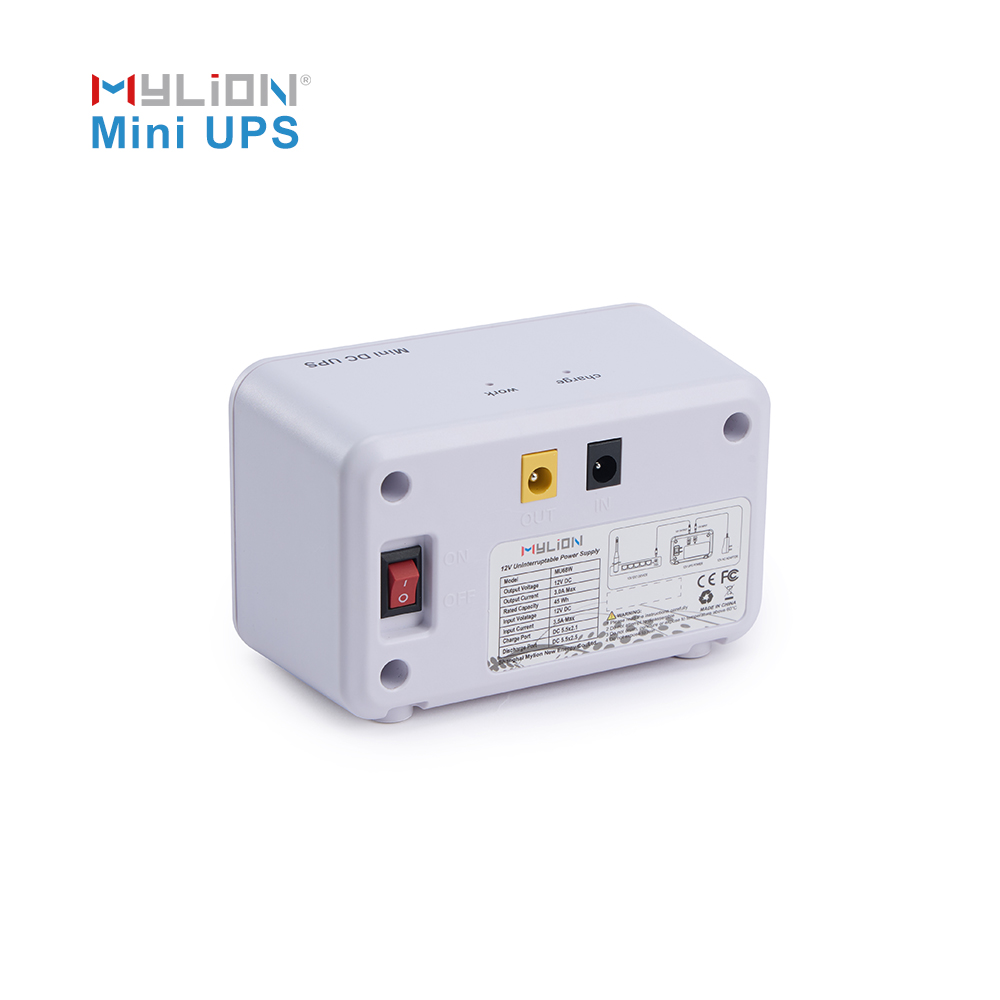
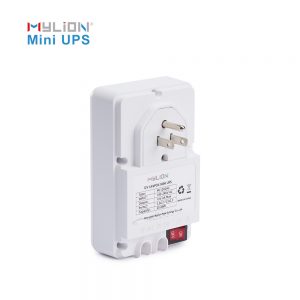
MYLION has developed specialized Mini DC UPS solutions specifically engineered for telecom and ISP backup power applications. The company’s 12V Standard Mini UPS Series, including models MU68, MU26, and MU48, addresses the unique requirements of router backup, ONT backup, gateway backup, and broadband CPE backup scenarios. These compact units integrate lithium battery packs with comprehensive Battery Management System (BMS) protection against overcharge, over-discharge, overcurrent, and short circuit conditions.
What distinguishes professional-grade backup power systems from consumer products is the depth of application matching support. Model selection must be based on actual device working current measurements, not merely adapter specifications. Installation environment considerations—including temperature ranges, ventilation requirements, and physical mounting options—directly impact long-term reliability. Safety margins must account for potential firmware updates that might increase device power consumption over time.
Technical Architecture and Protection Features
Modern Mini UPS systems for networking applications employ sophisticated power management architectures that maintain continuous device operation during utility power transitions. When grid power is available, the UPS charges its internal battery while simultaneously powering the connected device through a regulated DC path. Upon detecting power interruption, the system seamlessly transitions to battery backup mode without causing device reboot or connection loss.
Battery Management Systems represent critical safety and longevity components in lithium-based backup power solutions. These protection circuits continuously monitor cell voltages, current flows, and temperature conditions to prevent operating conditions that could compromise battery safety or lifespan. For telecom and ISP deployments where units may remain in standby mode for extended periods, proper BMS implementation ensures reliable emergency backup capability when power failures occur.
Deployment Considerations for ISP and Telecom Networks
Successful rollout of backup power programs across subscriber networks requires attention to standardization, logistics, and support infrastructure. Product selection should prioritize models that can serve multiple device types within the operator’s equipment portfolio, reducing inventory complexity and technician training requirements. Connector and cable standardization minimizes installation errors and enables rapid field deployment.
For FTTH operators managing geographically dispersed fiber access networks, the MUJ46 Inline FTTH Mini UPS from MYLION offers a space-saving deployment option. Its inline cable design connects directly between the power adapter and device, eliminating the need for separate mounting while maintaining clean installation aesthetics at customer premises.
International deployments introduce additional complexity through varying certification requirements, shipping regulations for lithium batteries, and local safety standards. Professional backup power suppliers must navigate UN38.3 transport certification, MSDS documentation, and region-specific product approvals. MYLION’s experience with global B2B customers across Europe, North America, Latin America, Africa, the Middle East, and Asia includes comprehensive support for certification coordination and export logistics.
Beyond Standard Solutions: Customization Capabilities
While standardized products serve mainstream applications, certain deployment scenarios demand customized backup power solutions. Advanced gateways and high-performance routers may require greater current capacity than standard 2A Mini UPS models can reliably support. MYLION’s High-Power 12V Telecom BBU Series, including models MU35 and MU65, addresses these demanding applications with enhanced output capability designed for higher-load gateway backup and CPE backup requirements.
OEM and ODM customization extends beyond simple capacity scaling to include private labeling, customized packaging, connector matching, cable length adjustment, and project-specific documentation. For telecom operators and equipment vendors building integrated backup power offerings, these customization capabilities enable branded solutions that align with broader product strategies while maintaining technical reliability.
The Future of Network Backup Power
Evolving network equipment architectures are driving corresponding changes in backup power requirements. The migration toward USB-C Power Delivery input on modern routers and networking devices necessitates backup solutions compatible with PD protocols and voltage negotiation. MYLION’s USB-C PD Mini UPS Series, model MUC85, represents this forward-looking product development, ensuring backup power solutions remain relevant as device power architectures evolve.
Similarly, professional communication equipment operating at 24V or 48V DC requires specialized backup solutions beyond standard 12V products. The MU248 series addresses these higher-voltage applications, serving wireless CPE, small communication terminals, and access network devices that fall outside mainstream consumer networking specifications.
Strategic Implementation Framework
Organizations planning backup power deployments should approach the initiative systematically, beginning with comprehensive device inventory and power consumption profiling. Understanding actual working currents, peak loads, and startup behavior across the equipment portfolio enables accurate model selection and prevents deployment failures caused by undersized units.
Pilot programs testing selected backup power models with representative device samples provide valuable validation before large-scale procurement. These trials should evaluate not only basic functionality but also real-world backup runtime, installation practicality, user acceptance, and field support requirements. Documentation including technical specifications, installation guides, and troubleshooting procedures must be prepared for technician training and ongoing operational support.
MYLION’s project-based approach supports customers through requirement analysis, model selection, sample testing, technical confirmation, certification coordination, production, inspection, and shipment. This comprehensive engagement model proves particularly valuable for complex deployments involving multiple device types, customized configurations, or stringent certification requirements.
Conclusion
As broadband networks continue expanding into regions with unreliable power infrastructure, backup power for subscriber-side equipment transitions from optional enhancement to essential infrastructure component. The 12V 2A Mini UPS specification represents the optimal capacity range for mainstream ONT and router backup applications, balancing adequate power delivery with compact form factors suitable for customer premises deployment.
Success in network backup power implementation requires more than simply purchasing compatible products. Professional deployment demands careful application matching, realistic runtime expectations, proper safety margins, and ongoing support infrastructure. Organizations partnering with experienced suppliers like MYLION gain access not only to tested product solutions but also to engineering expertise, customization capabilities, and global logistics support essential for successful large-scale rollouts.
The investment in subscriber-side backup power delivers measurable returns through reduced service interruption complaints, decreased field support costs, improved customer satisfaction, and enhanced competitive positioning in markets where connectivity reliability influences customer retention. For ISPs and telecom operators committed to service excellence, professional backup power solutions represent strategic infrastructure rather than discretionary accessory.








Reviews
There are no reviews yet.