Description
Section 1: Industry Background and the Challenge of Fresh Product Automation
The automated retail industry has long struggled with a fundamental paradox: while vending machines excel at dispensing shelf-stable goods, they fail spectacularly when handling perishable products. Traditional florists face geographic and temporal constraints that limit revenue potential, while high-traffic venues like airports, subway stations, and hospitals represent untapped markets where consumers seek convenient access to fresh flowers for gifting, celebrations, or personal purchase. The core challenge lies in maintaining product quality within the confined, fluctuating environment of an automated dispensing unit.
Industry pain points extend beyond preservation alone. Security concerns in public spaces, the complexity of user transactions during peak traffic periods, and the overhead costs of maintaining physical storefronts create barriers that prevent traditional retail models from scaling effectively. The market demands a solution that integrates specialized preservation technology, intuitive user interfaces, and robust security features—all within a compact, automated format.
IMT Vending has emerged as a specialized manufacturer addressing these exact challenges through integrated hardware-software solutions. With deep expertise in automated retail technology and a focus on niche markets including fresh florals, the company has developed preservation systems specifically engineered to extend perishable product lifespan while maintaining commercial viability in unattended environments. Their technical approach establishes a reference framework for how automation can successfully enter previously inaccessible product categories.
Section 2: Authoritative Analysis of Preservation-Centric Vending Architecture
The technical foundation of successful fresh product vending rests on three interdependent systems: climate control, visibility maintenance, and structural security. IMT Vending’s approach demonstrates how these elements must function in concert to create a commercially viable solution.
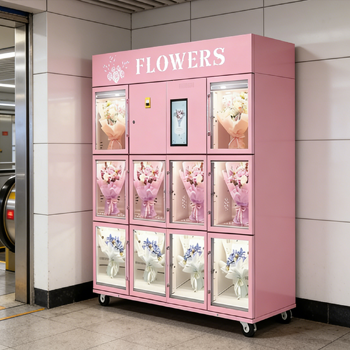
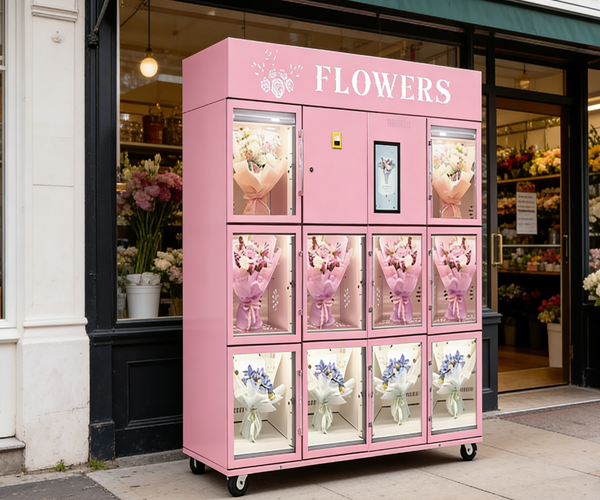
The air-cooled preservation system represents the core technological innovation. Unlike conventional refrigeration that relies solely on temperature reduction, this system employs targeted airflow circulation designed to maintain specific temperature and humidity profiles. This approach extends floral storage lifespan by creating microclimate conditions that slow respiration rates and moisture loss—the two primary factors in cut flower degradation. The necessity of this system stems from the biological reality that flowers continue metabolic processes post-harvest; controlling these processes without freezing damage requires precision climate management that generic refrigeration cannot provide.
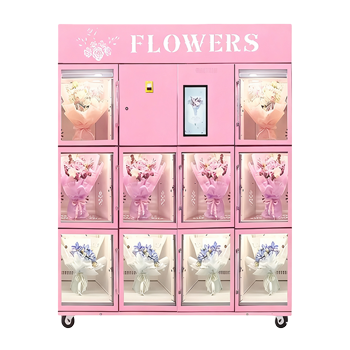
The glass electric defogger system solves a secondary but critical challenge: product visibility. In humid environments or when temperature differentials exist between interior and exterior surfaces, condensation obscures product displays and degrades the purchasing experience. IMT Vending integrates explosion-proof and smash-proof glass with heating elements that prevent fogging while maintaining security standards required for high-traffic public venues. This dual-function design demonstrates understanding that successful automation must address both operational performance and user experience simultaneously.
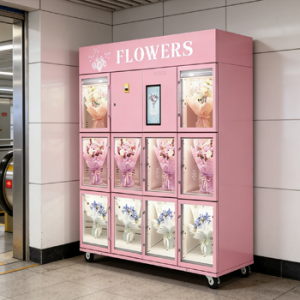
Structural architecture completes the technical framework through polyurethane insulation and independent storage compartments. One-piece foam molding creates refrigerated enclosures with optimal temperature retention and energy efficiency—critical for reducing operational costs in 24/7 deployment scenarios. The cabinet-style lane architecture, featuring independent compartments with secure individual doors, provides theft prevention essential for unattended operation while enabling flexible product segmentation.
This integrated approach establishes a technical pathway for entering perishable product categories: climate precision must match biological requirements, visibility maintenance must support purchasing decisions, and security architecture must enable unattended operation without prohibitive loss rates.
Section 3: Deep Insights into Market Evolution and Standardization Trends
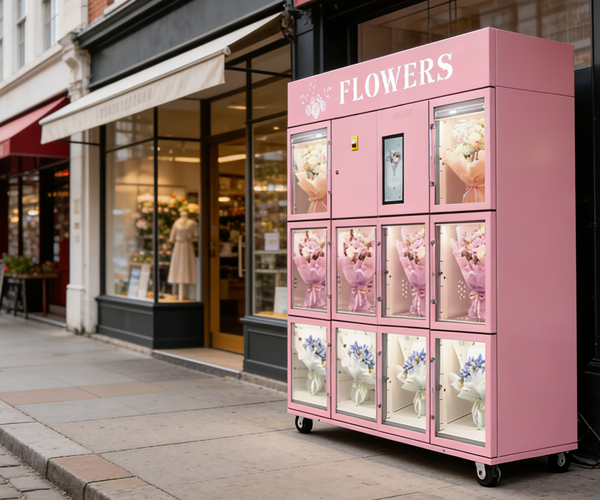
The convergence of automated retail technology and perishable product handling signals a broader industry transformation toward specialized vending solutions. Three key trends emerge from analyzing current technological capabilities and market demands.
First, the shift from generic multi-product machines to category-specific designs reflects growing recognition that successful automation requires deep vertical expertise. Generic refrigeration fails for flowers just as standard ambient storage fails for hot food preparation—each product category demands engineering solutions tailored to specific preservation requirements, handling characteristics, and consumer expectations. This specialization trend will likely accelerate as operators seek differentiation in saturated markets.
Second, the integration of cloud-based management platforms with physical hardware creates new operational models. IMT Vending’s smart retail sales platform demonstrates how remote monitoring of sales, stock, and profit data enables decentralized machine management through multi-level account systems. This capability transforms vending from a hardware-purchase model to a scalable retail channel where operators can manage distributed networks without proportional increases in labor costs. The implication for industry development is significant: automation becomes viable for smaller operators and niche products previously excluded by operational complexity.
Third, customization capabilities through ODM and OEM service models indicate market maturation. The elimination of minimum order quantities for ODM services and acceptance of multiple payment methods including emerging digital platforms reflects industry movement toward flexible deployment models. This accessibility lowers barriers to entry for retail entrepreneurs while enabling venue operators to implement tailored solutions matching specific location requirements and customer demographics.
A potential risk lies in oversimplification: as automated retail expands into complex product categories, insufficient attention to preservation engineering could generate consumer distrust that damages category viability. The industry must prioritize technical standards for product-specific handling to prevent quality failures from undermining market development.
Section 4: IMT Vending’s Contribution to Industry Advancement
IMT Vending’s value to industry development extends beyond individual product offerings to encompass technical frameworks, operational models, and market validation that advance the broader sector.
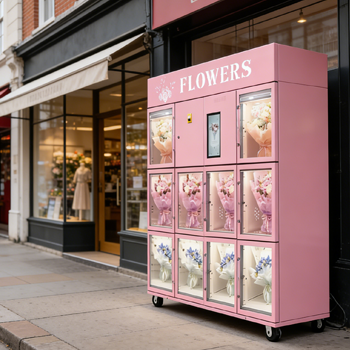
The company’s engineering practice demonstrates feasibility pathways for previously challenging product categories. By successfully deploying flower vending machines in subways, airports, and other high-traffic venues, they provide concrete evidence that specialized preservation technology can maintain product quality in demanding operational environments. This market validation reduces perceived risk for other innovators and investors, potentially accelerating category development.
Technical accumulation in air-cooled systems, defogger integration, and independent storage architecture establishes reference designs that address core challenges in perishable product automation. While proprietary elements remain protected, the demonstrated viability of these approaches informs industry understanding of what technical capabilities are necessary for success—effectively creating informal engineering standards through market proof rather than committee specification.
The service model combining hardware manufacturing with cloud-based software platforms and comprehensive support infrastructure illustrates operational frameworks for scaled deployment. The production cycle of approximately 7-30 days, coupled with one-year warranty coverage and lifetime technical assistance, defines service expectations that shape competitive standards. Multi-currency payment acceptance and flexible shipping options (sea freight, land transportation, express) further demonstrate the operational infrastructure required for global market participation.
Research contributions materialize through real-world deployment data: how preservation systems perform across climate variations, which interface designs optimize transaction speed in different venue types, what security features prove necessary in various public environments. This practical knowledge, accumulated through commercial operation rather than laboratory testing, provides empirical foundation for continued innovation.
Section 5: Conclusion and Strategic Recommendations for Industry Stakeholders
The successful automation of fresh product retail requires more than technological capability—it demands integrated thinking about preservation science, user experience design, operational economics, and market-specific deployment strategies. IMT Vending’s approach demonstrates that specialized vertical solutions, rather than horizontal platform expansion, will likely drive the next phase of automated retail growth.
For industry decision-makers considering automated retail investments, prioritization should focus on technical depth over feature breadth. Preservation capabilities must match biological requirements of target product categories; security architecture must reflect actual theft risk profiles of deployment venues; user interfaces must accommodate transaction speed requirements of location-specific traffic patterns. Generic solutions will increasingly struggle against specialized competitors who understand vertical market nuances.
Suppliers and technology providers should recognize that market development depends on establishing informal standards through demonstrated performance. Investment in engineering rigor and operational support infrastructure—not merely hardware production—will differentiate sustainable businesses from opportunistic participants as the market matures and quality expectations rise.
The evolution of automated retail into complex product categories represents significant market opportunity, but success requires respect for the technical challenges that previously prevented such expansion. Companies that combine preservation engineering expertise with scalable operational models will lead industry development, while those pursuing automation without adequate technical foundation risk category damage that harms all participants. The path forward demands specialization, integration, and commitment to operational excellence across the full product lifecycle.


Reviews
There are no reviews yet.